Surrealism in graphic design: The AI-powered trend redefining visual storytelling

Surrealism in graphic design is reshaping branding, powered by AI and nostalgia.

Grace Fussell 17min read 11 Mar 2026
Surrealism in graphic design

Surrealism in graphic design isn’t just trending; it’s becoming the new visual normal.

You might have noticed a shift in advertising and creative content of late. Where once realism reigned, even major brands are experimenting with floating castles, melting typography, and mind-bending graphics. It’s more than a visual trend; it’s a cultural shift driven by consumer habits with viewing surreal imagery and video content. AI definitely plays a part, but there are other factors to consider, with the influence of Japanese design, social media, and fantasy fiction contributing to the surrealism revival. 

In this deep dive, we’ll explore why surrealism in graphic design is booming in 2026, the brands using surrealism to captivate consumers, and the AI artists shaping the new face of surrealism.

TL;DR: Why surrealism is booming in 2026

  • AI has made dreamlike visuals fast and accessible
  • Social media favors high-impact, scroll-stopping imagery
  • Nostalgia + fantasy fuel escapism
  • Brands are using surrealism to stand out in saturated feeds

What is surrealism in graphic design?

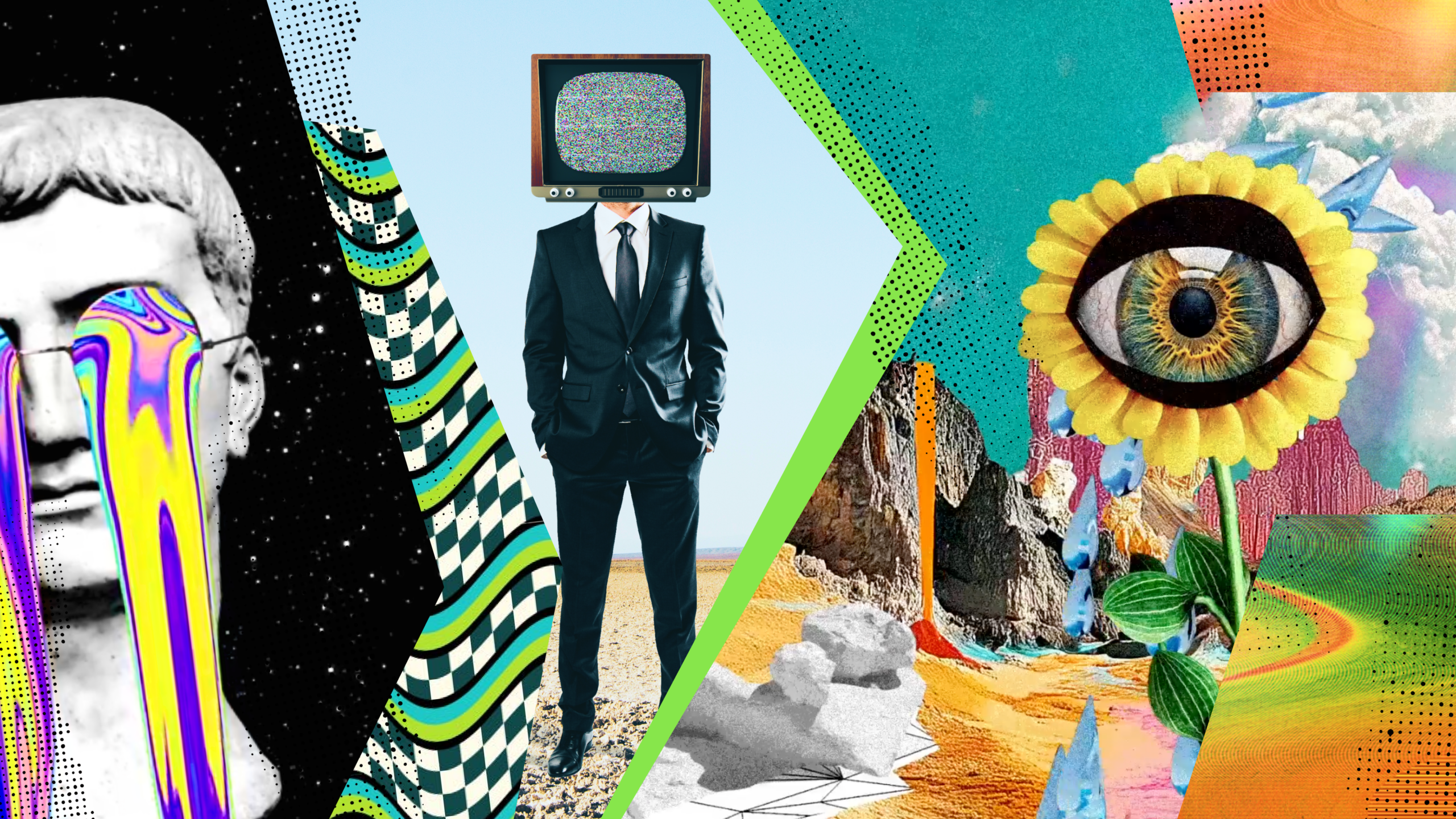
Surrealism in graphic design is a visual approach that combines realistic imagery with impossible, dreamlike, or illogical elements to create compositions that feel both familiar and strange. It deliberately bends the rules of scale, perspective, physics, and meaning to provoke emotion, curiosity, or surprise.

Unlike purely abstract design, surrealism often starts with something recognizable — a portrait, a product, a landscape, a piece of typography — and then introduces an unexpected twist. A floating object defies gravity. A face dissolves into architecture. Letters melt, stretch, or morph into living forms. The result is imagery that feels grounded in reality but slightly off-kilter, as if you’ve stepped into a lucid dream.

At its core, surrealism in graphic design is about tension. It creates a push-and-pull between logic and imagination, clarity and ambiguity, comfort and disruption. That tension is what makes surreal visuals so memorable.

Key characteristics of surrealism in graphic design

  • Symbolism layered beneath the surface
  • Juxtaposition of unrelated elements (for example, a whale suspended over a city skyline)
  • Distorted scale or proportion (tiny humans in giant interiors, oversized objects in realistic spaces)
  • Dreamlike lighting or atmosphere
  • Visual paradoxes (objects behaving in impossible ways)

A brief history (1920s roots)

The history of surrealism can be traced back to 1920s Europe. In the aftermath of World War I, artists sought to reject many of the bourgeois conventions of the time, which were seen as having led to the horrors of the war. The anti-war art movement Dadaism, or Dada, which found inspiration in the bizarre and nonsensical, provided fertile ground for surrealism to develop. 

The French poet André Breton, known as the ‘Pope of Surrealism’, founded and led the Surrealist art movement, counting artists Salvador Dalí and Joan Miró among its followers. Dalí is probably the most well-known surrealist artist, known for his dreamlike paintings of deserts draped with melting clocks and stilt-legged elephants. 

The original surrealist movement was characterized by symbolism, distorted scale, as well as connections to psychoanalysis and dream logic. Surrealism blends dreams and reality, making images feel at once both familiar and foreign.

How surrealism evolved into digital design

Fast-forward to today, and surrealism has collided with graphic design to fantastical digital effect, combining collage-style layouts, 3D abstract graphics, and visual paradoxes. Absorbing influences from a range of aesthetics, cultures, and AI design, the new surrealism in graphic design is more diverse and fluid, but retains the original 1920s spirit of dreamlike tension.

Why is surrealism trending in 2026?

Surrealism in graphic design isn’t resurging by accident. Its rise in 2026 is being powered by four overlapping forces: AI accessibility, social media saturation, cultural escapism, and nostalgia-driven aesthetics. Together, they’ve transformed surrealism from a niche art style to a mainstream visual language.

1. AI has democratized the surreal

Generative AI naturally blurs the line between reality and fantasy. Even subtle AI edits tend to introduce a slightly uncanny, dreamlike quality: warped light, softened physics, unexpected compositions. As a result, AI-generated and AI-enhanced visuals often carry an inherently surreal mood.

With AI tools dramatically lowering the technical barrier to complex image manipulation, designers no longer need hours of intricate compositing to create impossible scenes. What once required advanced Photoshop skills and painstaking masking can now be prototyped in seconds. That speed encourages experimentation — and experimentation favors the surreal.

This accessibility has also reshaped the industry. Some of the most exciting designers working today are AI-native surrealists who use the technology intentionally rather than randomly. The difference between rushed AI content and crafted surrealism is becoming a clear competitive advantage.

2. Social media has normalized dreamlike imagery


Audiences are now exposed to AI-altered and surreal visuals daily. As feeds become saturated with hyper-real photography and polished product shots, realism alone no longer interrupts scrolling. Surrealism does.
When everything looks “perfect,” perfection becomes invisible. A floating object, warped typography, or impossible scale creates friction — and friction captures attention.

In other words, surrealism performs well in the attention economy. It stands out in crowded feeds because it violates expectations without becoming incomprehensible. That balance between strange and recognizable makes it highly shareable.

3. Escapism is shaping visual culture

Surrealism thrives in times of uncertainty. Historically, the movement emerged in the aftermath of World War I as artists rejected rigid societal norms and sought meaning in the subconscious. Today’s cultural landscape — marked by political tension, economic pressure, and digital fatigue — has revived that appetite for alternative realities.

Fantasy-driven aesthetics, immersive world-building, and heightened visual storytelling offer an emotional escape. Surrealism allows audiences to step outside ordinary constraints, even if only for five seconds in a social feed.

This isn’t randomness. It’s controlled imagination as relief.

4. Nostalgia and retro futurism make surrealism feel safe

Pure surrealism can be unsettling. But when paired with nostalgia (vintage references, retro color palettes, historical silhouettes), it becomes emotionally anchored.

Retro futurism, fantasy fiction, and revived cultural aesthetics give surreal visuals a familiar base layer. That familiarity reduces resistance. Viewers feel grounded enough to engage, even as the design bends reality.

For brands, this is powerful. Surrealism grabs attention; nostalgia builds comfort. Together, they create visuals that are both disruptive and inviting.

Surrealism in graphic design is booming not just because it looks interesting, but because it aligns perfectly with how we create, consume, and emotionally process visual content in 2026. Technology enables it. Social platforms reward it. Culture craves it. And nostalgia softens it.

That combination makes this less of a passing trend — and more of a visual shift.

Case study: nostalgic surrealism as commercial strategy

Still need convincing? Undeniably, the biggest marketing event of the year was the lovechild of nostalgic surrealism: the big-screen adaptation of Wuthering Heights. Let’s take a look at this case study in more detail.

The most-discussed, divisive movie of 2026 was, no doubt, the Emerald Fennell-directed adaptation of Wuthering Heights. Both praised and panned, it split critics but saw record audience figures at theaters worldwide, with the film’s aesthetic proving a major talking point. 

A blend of period elements and heightened fantasy lent the adaptation a uniquely lurid, wild aesthetic, with human-skin wallpaper, giant birdcages, and hand-strewn fireplaces providing the backdrop to the drama. Historically faithful, it was not.

Why does this hybrid of surrealism and nostalgia hit just right for 2026? The familiar foundation of the novel and its historical setting anchor the surrealist aesthetic, making audiences feel at once both comforted by the familiarity and stimulated by the departure from historical style tropes. Surrealism in this context has been used to heighten emotional intensity, allowing audiences to disappear into the narrative and experience complete escapism. 

And, perhaps above all, the movie aesthetics translate seamlessly to social media content, making for endlessly rewatchable clips that fuse fantasy and romance into an eye-popping 5-second package. It might not be the best movie of all time, but Wuthering Heights certainly demonstrates the power of surrealist design to drive box-office success.

The new surrealism: how AI artists are redefining visual language

These trailblazing creatives are channeling surrealism in graphic design in fresh and exciting ways, with AI-edited content that is capturing the attention of major brands. Immersive storytelling, beautiful execution, and a cohesive visual identity set these three AI artists apart from a sea of mediocre AI-generated designs. 

For these creatives, the focus is on using AI as a channel for creativity, rather than a directing force. We have some incredible insights from the artists themselves about their creative process, so read on for some fantastic surrealist inspiration.

1. Saint Louvent 

Paris-based Sybille de Saint Louvent is a multidisciplinary creative director with a talent for infusing high-fashion imagery with hypnotic narrative and a subtly surrealist eye for detail. Her work has attracted the attention of heritage brands, including Gucci, which tapped the artist for a collaboration last year.

Her serene editorial-style designs for Prada, Calvin Klein, Jil Sander, and The Row are unified by a restricted, tonal color palette and an air of the mysterious unknown. In her own words, the artist describes the role AI plays in crafting her creative output:

“AI doesn’t replace thought, it extends a way of thinking. I approach it less as a machine and more as a conversation partner: it requires precision, and sensitivity.

For me it’s ultimately a storytelling instrument, a way to translate inner narratives into images. What interests me is not the technology itself, but the space it opens between imagination and image, where something slightly uncanny, almost surreal, can emerge. That threshold is where I like to work.”

2. Lohan Le Galloudec 

Nomadic visual artist Lohan Le Galloudec creates narrative-driven, fantastical work that lies at the intersection between technology and nature. His sensitive use of AI as an ideation tool lends his work a uniquely calm, meditative mood not often seen in quickly generated AI content. In his own words, Lohan describes his work and the influence of both surrealism and AI in his creative process: 

“I try to make illustrations that slow the viewer down: soft, meditative scenes where, for example, a small cosmic impossibility bends reality just enough to reveal how beautiful and peaceful the natural world can be… and how tiny we truly are. It’s a counterpoint to an over-technical, speed-driven lifestyle that often replaces living nature with controlled, human-made versions of it.

Process-wise, AI is mostly an ideation tool for me; a way to generate quick visual thumbnails and unexpected connections. From there, I move through a structured concept-art pipeline: I define a clear story beat and emotional intention, set a simple visual brief, then art-direct the piece through focused passes—composition and values first, then atmosphere and color, then paintover and finishing. 

My top tip is to separate ideation from execution. Use AI to explore breadth, but make the human decisions early, such as intent, mood, focal point and narrative clarity, and refine deliberately until the image carries emotion and meaning.”

3. Juan Carlos Beltrán

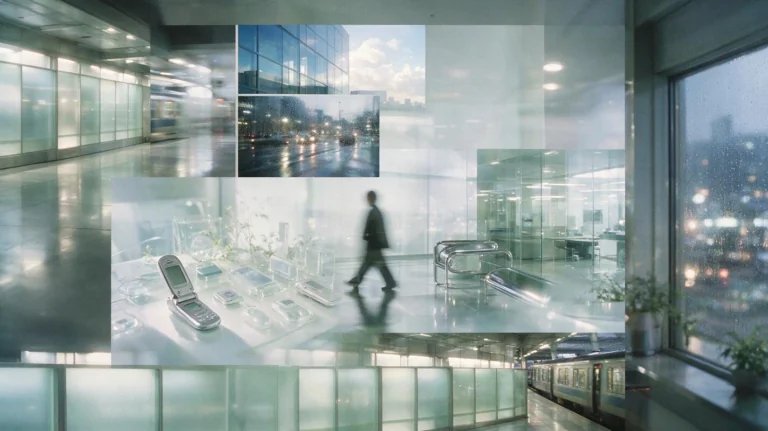
Mexican artist Juan Carlos Beltrán creates cinematic AI-generated imagery that blurs the boundaries between photography, architecture, and fashion. His back catalog is full to the brim of absorbing, beautifully composed images that look like stills from an arthouse Fifties film. 

Modernism and the distinctive landscape of his hometown, Culiacán, have been major influences on his aesthetic, with each image feeling like a fine art photograph or a street-inspired snapshot of a surreal yet recognizable culture. Surrealist elements bring to mind the work of fellow Mexican artist Frida Kahlo, with imagined interiors, horses, and historical Mexican costumes making a nod to this country’s legacy of surrealist art and design.

How brands are using surrealism in 2026 

Surrealism used to be a counterculture aesthetic, but this year, more mainstream brands are choosing to channel the style for branding, ad campaigns, and packaging.

Fashion: high surrealism

Fashion has fully embraced the surrealism revival, with Gucci, Loewe, and Altazurra all releasing offbeat, eccentric collections and campaigns for 2026, while product design and graphic design are channeling a playful interpretation of the trend.

Parisian fashion house Schiaparelli was founded in 1927 by the surrealist fashion designer Elsa Schiaparelli, a collaborator of Salvador Dalí. Today, the brand is experiencing a revival, with its eccentric couture creations worn by celebrities like Demi Moore, Teyana Taylor, and Bella Hadid.

Luxury brand Gucci recently released a short film, The Tiger, directed by Spike Jonze and commissioned to celebrate the release of the house’s “La Famiglia” collection. The film features Gucci’s characteristic retro-eclectic style, combined with surreal elements, like trippy collage-inspired videography. Faithful to surrealism’s 1920s roots, the brand uses eye icons, couture-clad twins, and a sprawling, palatial mansion to build a ‘Fellini-esque’ dreamscape for viewers.

Commercial brands: playful surrealism

Meanwhile, SKIMS has been experimenting with surrealism as a unique marketing strategy, turning to AI wizard Sam Finn (who also contributed to The Tiger) to create a real-meets-artificial balloon version of the brand’s logo.

Swedish furniture brand IKEA, no stranger to quirky campaigns, has launched a 2026 collection inspired by play, and designed to bridge the gap between products aimed at kids and adults. The result? Thirty fun, surrealism-inspired products designed to spark creativity and inspiration at home. It’s surrealism, with a unique Scandinavian flavor.

Graphic design and packaging: surreal silliness

Across graphic design and packaging design, a playful take on surrealism is set to be big news in 2026, with Adobe pitching ‘Surreal Silliness’ as an aesthetic to channel for social media designs and more. Compared to high fashion’s interpretation, graphic design is taking a less serious approach, with AI-inspired design, cartoon animals, and lashings of pastel pink.

How to create your own surreal designs 

The best way to create surreal designs for social media, branding, and packaging design is to embrace a blend of AI and manual manipulation. This allows you to experiment freely with surreal concepts, while bringing in the pinpoint refinements that will lift your design into extra-special territory. 

  • 1. Introduce one impossible element: Begin by using an AI image generator like ImageGen to introduce one impossible element into an image. A good place to start is to upload an image reference into the generator, before using creative AI prompts to define what you’d like to bring in as a twist. You can also use style references to increase the level of surrealism in an AI image. For example, retro futurism will give your generation a nostalgic, technological twist, while a grunge aesthetic can lend images a gritty, collage style that contributes to that anarchic, surrealistic vibe.
  • 2. Manipulate scale or physics: Once you’ve introduced your impossible element, push it further by bending the rules of size, gravity, or perspective. Make something oversized in a small environment. Suspend an object midair without visible support. By defining something as ‘floating’, ‘warped’, or ‘enlarged’, you can play with the scale of the element you’re introducing.
  • 3. Anchor the scene in reality: Here’s the secret most beginners miss: surrealism only works when something feels believable. Maybe a conventional landscape can feature a floating whale above it, or perhaps an enlarged human eye on an otherwise realistic portrait will give the image a surreal edge.
  • 4. Refine manually: AI can generate the concept, but refinement creates credibility. Once you have an initial image to work with, you can move to ImageEdit for refinements (keep your subject consistent for best results) and to VideoGen to transform a static concept into a complete video. You can then add more refinement to your creative output by moving on to Photoshop or other design software. From here, you can polish details, erase AI fails, adjust color palettes, and add typography for shareable designs. You can find a wide range of resources for adding background textures and surreal fonts.
  • 5. Add narrative intention: The strongest surreal designs hint at a deeper meaning. Ask yourself: What is this image saying? Is the floating object symbolic? Does the distortion suggest emotional tension? Is there a subtle metaphor embedded in the scale shift? Even a loose narrative thread elevates your work from a visual trick to visual storytelling. For example, a house drifting into the sky can suggest instability or longing, and melting typography might reflect time slipping away. Surrealism becomes powerful when it feels like a dream with a message — not just a glitch in reality.

Common surrealism mistakes to avoid 

When it comes to surrealism, there’s a fine line between dazzling…and baffling. These pro tips will help you stay on the right side of beautiful and bizarre in your own projects. 

  • Weird overload: There is such a thing as ‘too weird’, although #weirdgirlcore would beg to differ. Successful surrealism is about drawing the eye to something off-kilter or unexpected, but the effect is actually diluted if you have too many strange elements competing for attention. Stick to one key surreal object in each image for maximum impact. Less is more.
  • Concept over execution: Fantastic surrealism isn’t ‘AI slop,’ even though it could be generated by AI. A lot of poor-quality AI content is fast-generated and poorly refined, whereas genuinely good surrealist AI involves multiple rounds of refinement. To ensure your generations stand out, focus as much on refining the details in your design as coming up with an unusual concept in the first place.
  • Overlooking the deeper meaning: The original surrealists experimented with randomness, but they weren’t distracted by it. Randomness alone is simply…random! Building meaningfulness into a design by hinting at a wider narrative or incorporating symbolism will make your designs feel more immersive and interesting to look at.   

Surrealism in graphic design FAQs

Dreamscapes: The future of surrealism 

Given the growth of AI design, we expect the surrealism trend in graphic design to continue well into 2026 and beyond. As AI artistry becomes more sought after by mainstream brands, the potential of this technology to reinterpret surrealist styles is only likely to grow. We predict more surrealist video content, featuring interactive dreamscapes and world-building, as fantasy, gaming, and surrealism collide. 

As the surreal becomes normalized and no longer experimental, we anticipate it to be integrated into a far wider range of designs, especially as AI democratizes high-concept visuals, making grassroots AI artists and major brands equally important players. Just keep in mind that surrealism isn’t random chaos; it’s creative imagination controlled. The designers who master intentional surrealism will really stand out in 2026. 

Ready to experiment with your own surrealist AI projects? Read up on how Nano Banana Pro 2 is transforming image generation potential, learn how to write advanced AI video prompts for spellbinding, cinematic results, and check out our surrealism in graphic design collection.

Related Posts

Surrealism in graphic design is having a moment. This offbeat 2026 design trend is powered by next-generation AI and creative flex, with designers and brands exploring the potential of the unreal and uncanny.