.jpg?w=900&h=506&cf_fit=cover&q=85&format=auto&s=4a6488361e0fd19a740c2b593ebbb7d6db46ab5a501d3155e5e96996aab33365)


AI art prompts: The complete guide to creating better AI-generated artwork
Explore AI art prompts for better image generation, including AI art styles, materials, colors, events, and AI prompt tips for creating more controlled visuals.
Envato: Get every type of asset for any type of project, and access to AI tools. Start now
Jump in, let's explore what creators should know about AI's influence on graphic design.

Are you ready to dive into the world of generative AI in graphic design? Whether you’re a tech enthusiast or somewhat skeptical, it’s time to reconsider the incredible opportunities AI brings to the creative landscape. Today, many creative agencies and brands are using new tools and AI design trends in their design process. Designers are producing stunning commercial projects, redefining branding, advertising, and marketing, and shaping exciting new design trends along the way.
In this guide, we’ll look at how AI is changing graphic design for creators. You will find useful ways to use AI in your work, see inspiring examples, and consider what the future may bring for AI in creativity. If you’re interested in how AI can help you explore new ideas and keep you ahead in your field, read on to discover this exciting journey!

That is the big question, and it is a valid concern, especially since Generative AI can create high-quality images in seconds. Much of the criticism of AI in design stems from low-quality AI images or the sense that viewers are being tricked. However, the truth about AI in graphic design is more interesting than the panic suggests. What’s often overlooked in this discussion is that the best uses of AI in graphic design do not involve tricking people. Instead, they focus on creating things once thought impossible. For example, surreal dreamscapes that would take weeks to make in Photoshop can be formed from a single paragraph of text.
So the short answer? No, AI isn’t replacing creativity; it’s reshaping it. Think of AI as creative jet fuel. The spark still comes from you.
AI is changing the way designers work. Instead of replacing creativity, generative AI is becoming part sketchbook, part brainstorming partner, part production assistant. It helps creatives move faster through repetitive tasks so they can spend more time on the ideas, storytelling, and experimentation that actually matter.
This method isn’t about faking creativity; it’s all about pushing the boundaries of what you can do. It helps you try things out quicker, explore visuals more freely, and tell deeper stories.
Many of the best marketing agencies and graphic designers producing highly creative commercial work actively lean into the capabilities AI in graphic design offers. Whether it’s transforming a static idea into an animated AI video for social media content or creating hyper-surrealist imagery for an ad campaign, there are amazing things that can be achieved with AI. All it requires is your imagination (and some helpful AI art prompts).
Brand strategist Adriana Bubori, Co-Founder of the Swiss branding agency YVORI AG, said, “Posts last about 3 to 4 days, but our products last much longer.” AI is great for quickly creating a lot of social media content, giving you more time to focus on work that lasts.
It’s time to stop worrying about AI taking our jobs and start looking at it as the ultimate creative partner. We’re moving away from that initial AI panic and into an era of high-speed partnership that actually makes the design process a lot more fun.
Think of AI as your most over-eager intern; it’s there to handle the heavy lifting while you stay the boss of the vibes and the strategy. Here’s how you can adjust to this new workflow:
Design is evolving faster than ever. In 2026, it’s not just about following trends; it’s about using them wisely to be different. Here are some current AI design trends and examples of how leading brands are using them in their work.
Move over, beige walls and empty spaces, Maximalism is taking over graphic design in 2026. If you’re tired of that plain Western minimalism, this movement is your colorful antidote. It’s all about the “more is more” vibe, taking cues from the vibrant craziness of Indian streets, their colorful truck art, and the detailed carvings from ancient temples. It is not just a trend; it is a strong celebration of cultural identity through storytelling with bold patterns and local vibes. Two brands that are using this style are:

In 2026, beauty and wellness brands are popularizing Brutalist and hyper-bold typography. It’s all about being loud and authentic to grab Gen Z’s attention with huge, bold fonts that take up almost the entire bottle. For example:
Overall, these brands are proving that you don’t need fancy pictures when the font is bold enough to do all the talking. It’s the perfect mix of “this stuff works” and “this looks cool on my shelf.” You can tap into Elements to source high-impact sans-serifs and experimental display typefaces that mirror this high-energy aesthetic.

In 2026, design trends are moving away from flat digital screens and toward tactile, textured designs. They want apps and feeds to feel like real surfaces you can touch. To achieve this, they are using elements like paper textures, denim patterns, Polaroid light effects, and moody cyanotype styles. Some brands using this tactile trend include:
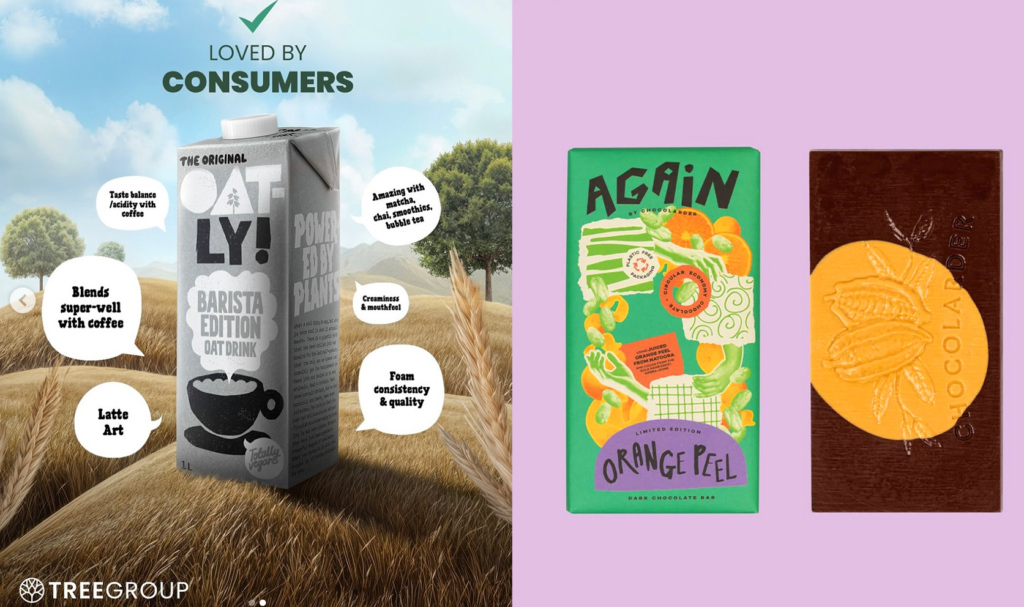
Retro-futurism is like “yesterday’s view of the future.” It is popular because it combines old-fashioned nostalgia with sci-fi creativity. Instead of showing a dark, bleak future, this style focuses on a fun, hopeful, and slightly quirky idea of what past generations (from the 1950s to the 90s) thought the future would be like. You can spot it by its shiny chrome finishes, grainy overlays, and a few analog glitch effects. Plus, it features space-age stuff like robots, spacesuits, and bold lettering.
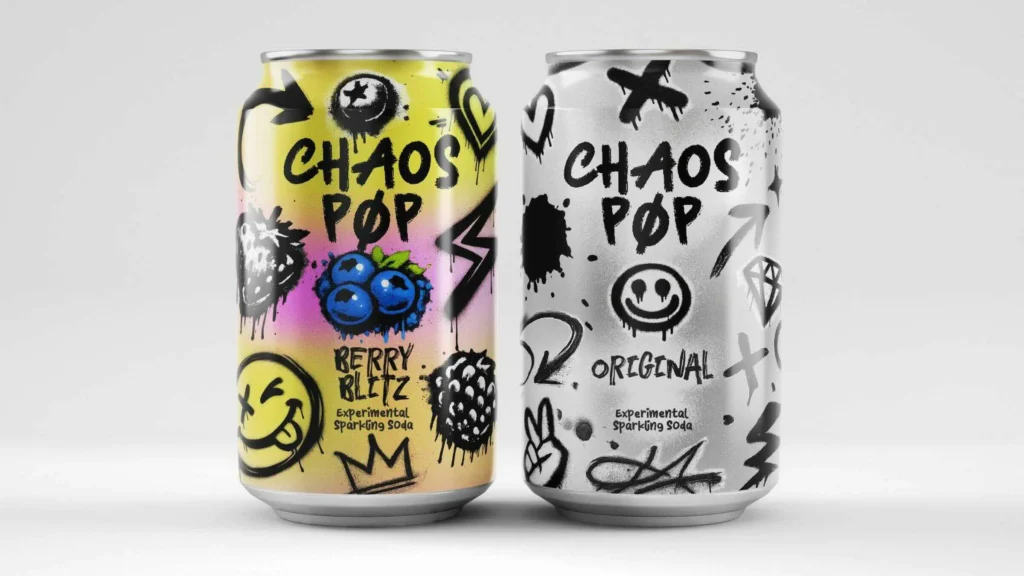
For example, Pepsi, in their EDC Mexico collab, used metallic inks and techy graphics to turn the soda can into a piece of “space-age” art.
Nike jumped in on the action too with the Air Max Dn8, stepping into the future while keeping its legendary vibe alive. The design has this cool, sci-fi look that makes the shoes feel like they’re from an awesome version of the future. It blends classic style with some sleek, futuristic elements.

Big and independent brands are increasingly interested in using AI to create unique content for advertising, social media, branding, and website design. Check out how flexible AI can team up with human creativity to take brand campaigns to the next level.
Heinz totally leaned into the future with their “A.I. Ketchup” campaign! They teamed up with DALL·E 2 to see what generative AI thought ketchup looked like, and the results were super imaginative, ranging from Renaissance paintings to synthwave vibes. It turns out, even AI knows that ketchup has to be Heinz, as almost every prompt resulted in that iconic bottle shape. The campaign was a massive hit, racking up over 850 million impressions and proving that even a classic brand can stay fresh with a little tech-driven creativity!
Product photographer Rita Van Werven shows how to blend real images with AI editing to create unique and polished results. Her still life photos for cosmetics brands like Oribe, Guerlain, and Ouai offer great inspiration for graphic designers looking to combine photography and AI in their projects. Subtle details like light, background, and texture can be added into a photograph using AI, elevating the result and making imagery more flexible. If a client wants to switch up the color or mood, with AI it’s no big deal.
AI in advertising isn’t just about looking cool; it’s about getting people involved. Burger King totally nailed this with their “Million Dollar Whopper” contest. They used an AI buddy named “Brilliant” to help fans design their ultimate burger. Not only did users get to imagine crazy toppings like corn chips or broccoli, but the AI also whipped up unique images and even personalized jingles for each creation! It was a brilliant way to reclaim their “Have it Your Way” crown while boosting their mobile engagement through the roof.
AI is proving to be more than just a tool for quickly making mood boards and prototypes. Its biggest impact comes from helping to create stories. Instead of just filling a grid with images, creators are now using generative AI to plan and develop complex narratives that would otherwise be too expensive.
A good example is Nike’s “Never Done Evolving” campaign. The team wanted to tell an emotional story about growth in sports, discipline, and human potential. They needed to show a story that went beyond time: a simulated tennis match between a young Serena Williams and her current self.
Rather than using typical editing methods, the team used advanced computer technology and AI trained on decades of old match footage.
To create the story, creative directors gave the AI clear instructions to study and replicate Williams’ changing play style, footwork, and shot choices over the years. The AI then acted as a partner, showing how her appearance, physical condition, and style changed over time in a continuous storyline.
By using AI to connect visuals from different decades, the campaign transformed from a simple look back into a vibrant story of personal growth. This shows that AI’s true value in creativity lies not only in making striking visuals but also in combining large amounts of visual information to tell a deep, engaging story from start to finish.
This workflow of turning stories into assets works even better with an Envato subscription. The unlimited access to assets acts like a storage vault, allowing you to quickly use AI-generated story ideas as design, motion, and template resources throughout the entire campaign.
Trend forecasting used to rely on guesswork. Now, with AI, you can spot trends. It helps you identify new styles before they become popular. Generative AI is particularly helpful because it can analyze large amounts of data to find patterns and new visual styles.
The Prompt Formula for Trend Exploration:
[Subject] + [Mood/Aesthetic] + [Medium/Style] + [Era Reference]
For example, let’s explore “Serene Surrealism”:
A floating library inside a glass bubble, suspended in a calm pastel sky, soft volumetric fog, dreamlike, ethereal 3D render, Studio Ghibli meets René Magritte.

Think of AI as a way to clone your design eye, not replace it. The trick to avoiding that generic AI look is feeding it your specific taste as a reference. Instead of starting from scratch, you can use your favorite Envato assets to train the machine on what you actually like. Here’s how to lock in your distinct style with Envato assets:
Try this “Grit & Grime” prompt:
Grungy analog flash photo of two friends hugging in a messy apartment, mirror reflection, harsh shadows, imperfect skin, red-eye effect, disposable camera aesthetic, 1999.
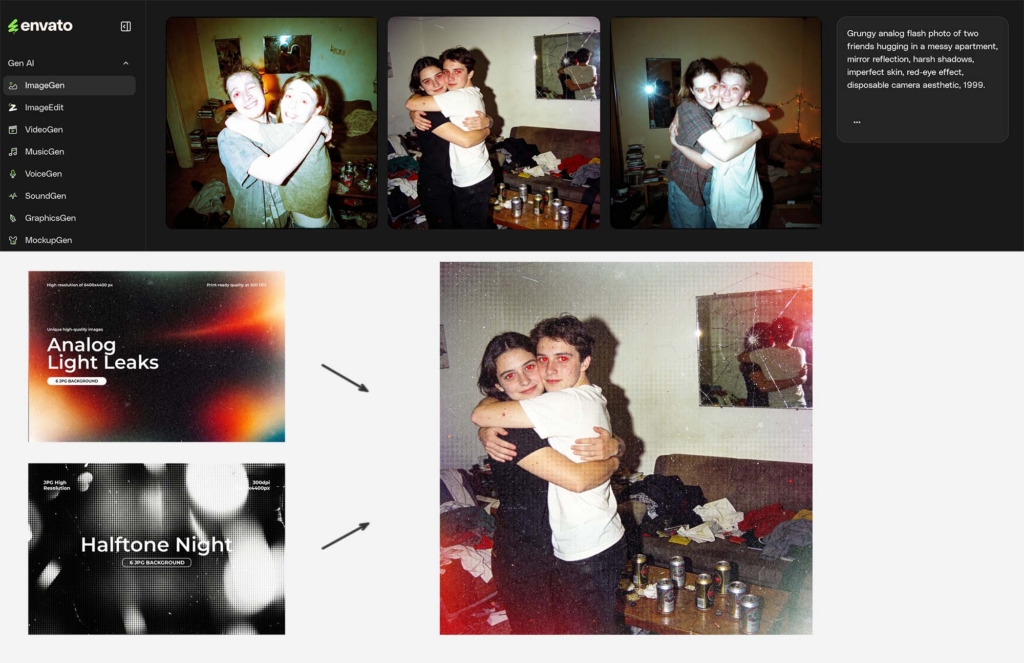
As we’ve already seen, generative AI in graphic design is all about attitude, how you use it to elevate your own creative ideas, and how to generate and edit AI imagery that sets your AI projects apart from the crowd. In a sea of so-so AI design, it’s the strength of your ideas and small details that will really give you the edge. Let’s look at a few ways you can apply these AI design trends to your own projects.
To create a realistic and gritty look in AI-generated images, focus on small details that can make a picture seem real or fake. Pay attention to skin imperfections, natural lighting, and raw, unfiltered styles. These elements help make AI-generated human portraits appear more believable and authentic.
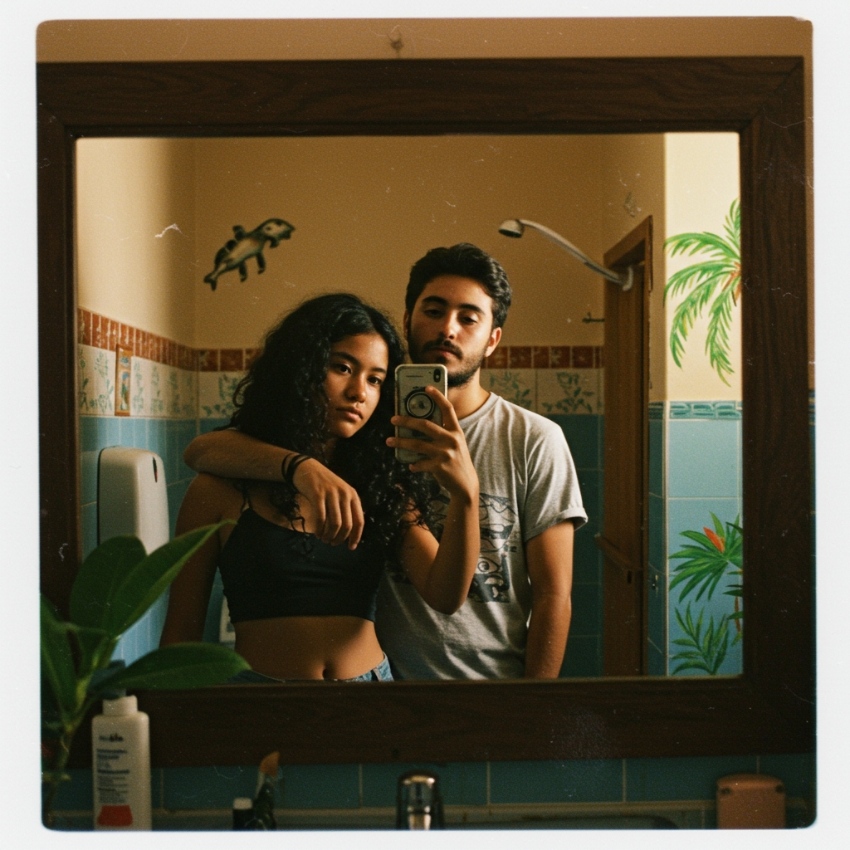
Use this prompt to recreate images like the realistic couple portrait above:
Grungy analog flash photo both uploaded photos standing in front of a mirror hugging.
Explore a blend of nostalgia and modern design with retro-futuristic AI art. You can combine shiny chrome looks with old-school analog effects. This style allows you to merge 1980s sci-fi vibes with today’s digital detail, creating your own unique visual piece.

Use this prompt to recreate images like the retro-futuristic portrait above:
Ultra-realistic editorial fashion portrait of a beautiful woman with polished chrome skin and subtle wear marks, close-up composition inspired by retro-futurist glamour photography, glittering reflective bodysuit covered in micro-crystal textures, radiant synthetic beauty, elegant facial structure with glossy metallic highlights, rainbow starburst lens flares floating against a deep black background, soft film grain, nostalgic sci-fi mood, cinematic lighting, reflective surfaces, sleek modular fashion design, dreamy closed eyes with shimmering makeup, futuristic melancholy, high contrast shadows, rain-speckled window reflections, luxury magazine photography, hyper-detailed skin texture, analog disco-futurism aesthetic, 35mm film look
Most AI images or videos you see take very little time to create. With a quick prompt, you can get good results in just a couple of minutes. However, making truly great creative images takes more effort, even with AI. AI artists are not lazy; they use AI as a tool to achieve their vision, a process that often requires hours of careful adjustments.
To get better results, focus on improving your AI prompts. You can also use an image generator like ImageGen to enhance your written prompts. For a more professional look, edit your images afterward to add specific details that may be missing from the generated output.

Use this prompt to recreate images like the macro cat portrait above:
Macro portrait of a curious cat, ethereal rainbow light, prism effect, soft focus, dreamy, vibrant colors, bokeh background, cozy indoor setting, volumetric lighting, high resolution, detailed fur texture, captivating eyes, serene mood.
Not likely, but it will take over the boring bits. The real benefit of AI in design is teamwork, not replacement. AI can handle repetitive work, inspire new ideas, and quickly increase your creative output. However, your imagination, taste, and understanding of a brand’s style are essential.
From Retro-futurism to Desi-Maximalism, design trends in 2026 are all about extremes. Designers are embracing nostalgic aesthetics, hyper-futurism, and even raw, flawed realism to make their AI creations feel more authentic. These trends show how design and artificial intelligence can fuse to create styles that feel both human and fantastical.
Use AI to enhance your creativity, not to replace it. Generative AI works best in graphic design when you have a strong idea. Whether you’re creating chaotic or maximalist designs, it all comes down to your prompts and post-editing. Be specific and purposeful. Remember that refining your work is what turns simple AI images into great designs.
That depends on how you use it. The key to authentic artificial intelligence in graphic design lies in transparency and intent. If you’re upfront about AI’s role and use it to serve your creative purpose — not trick people — then yes, it absolutely counts. Audiences can spot a fake (and they don’t love it). But if the design resonates? You’ve done your job.
The future is flexible. AI isn’t replacing graphic designers; it’s reshaping their workflows. Expect more hybrid roles, AI-driven personalization, and on-the-fly design iterations. Designers who embrace AI in graphic design will have more tools to play with, more room to explore, and more time to focus on what they do best: creating bold, original work that stands out.
The latest AI design trends show that AI is not only here to stay but is also helping graphic designers push their creativity to new levels. Experimentation and discovery is all part of the fun!
Ready to start creating and refining your own AI image prompts? Whether you’re exploring AI concept art prompt styles or experimenting with the latest digital art styles for prompts, Envato’s ImageGen and GraphicsGen offer an ideal playground for creators. Dive in, start experimenting, and see how far AI can take your creative process.
Looking for more AI art inspiration? Discover 5 ways to use Envato’s AI tools in your creative work, from automatic voiceovers to video creation.
Ready to start using AI elements in your marketing projects? Craft emotive AI videos for YouTube with AI Video Generator, beautiful soundtracks for creative content with MusicGen, and use creative AI prompts to get the best from your campaign imagery with ImageGen.
Explore AI art prompts for better image generation, including AI art styles, materials, colors, events, and AI prompt tips for creating more controlled visuals.

Explore movie typography trends shaping 2026, from bold film fonts to cinematic branding, with inspiring examples and practical tips for creating impactful, screen-ready typography.

Explore the tennis aesthetic trend for 2026, from preppy style and color palettes to branding and design ideas inspired by tennis culture, fashion, and modern creative projects.

Fourteen World Cup shirts that still matter, from Brazil 1954 to Cameroon's banned vest. The design thinking behind the kits that lasted, and what they all have in common.