Movie typography in 2026: why does it suddenly look so good?
Explore movie typography trends shaping 2026, from bold film fonts to cinematic branding, with inspiring examples and practical tips for creating impactful, screen-ready typography.
Envato: Get every type of asset for any type of project, and access to AI tools. Start now
Bold botanical design blends nature, craft, and maximalism into a powerful modern creative trend.
Botanical design is evolving fast in 2026, with bold botanical design emerging as a defining creative direction across branding, interiors, fashion, and digital experiences. Rooted in nature, gardening culture, and biophilic design, this design trend reimagines plant-inspired aesthetics through a richer, more immersive lens.
Taking a leaf (see what we did there) from the original Arts and Crafts movement, botanical design gives craft a contemporary twist, encouraging creatives to reconnect with slower, more intentional ways of making.
The successor to nature-inspired movements like Craftcore and slow living, bold botanical design taps into our growing desire to reconnect with the natural world. In an era dominated by fast-paced content and mass production, it offers a welcome antidote — one that prioritizes texture, growth, and organic beauty.
In this guide, explore the botanical design trend in depth, discover inspirational examples across industries, and learn how to use botanical patterns, backgrounds, and typography in your own projects.
Botanical design is a creative approach that uses plant-inspired elements — such as foliage, flowers, and natural textures — to create visuals rooted in nature. It’s widely used across branding, interiors, and digital design to evoke calm, growth, and organic beauty.
While floral design focuses more on decorative flowers, botanical design often highlights foliage, greenery, and natural ecosystems, creating a richer, more immersive aesthetic.
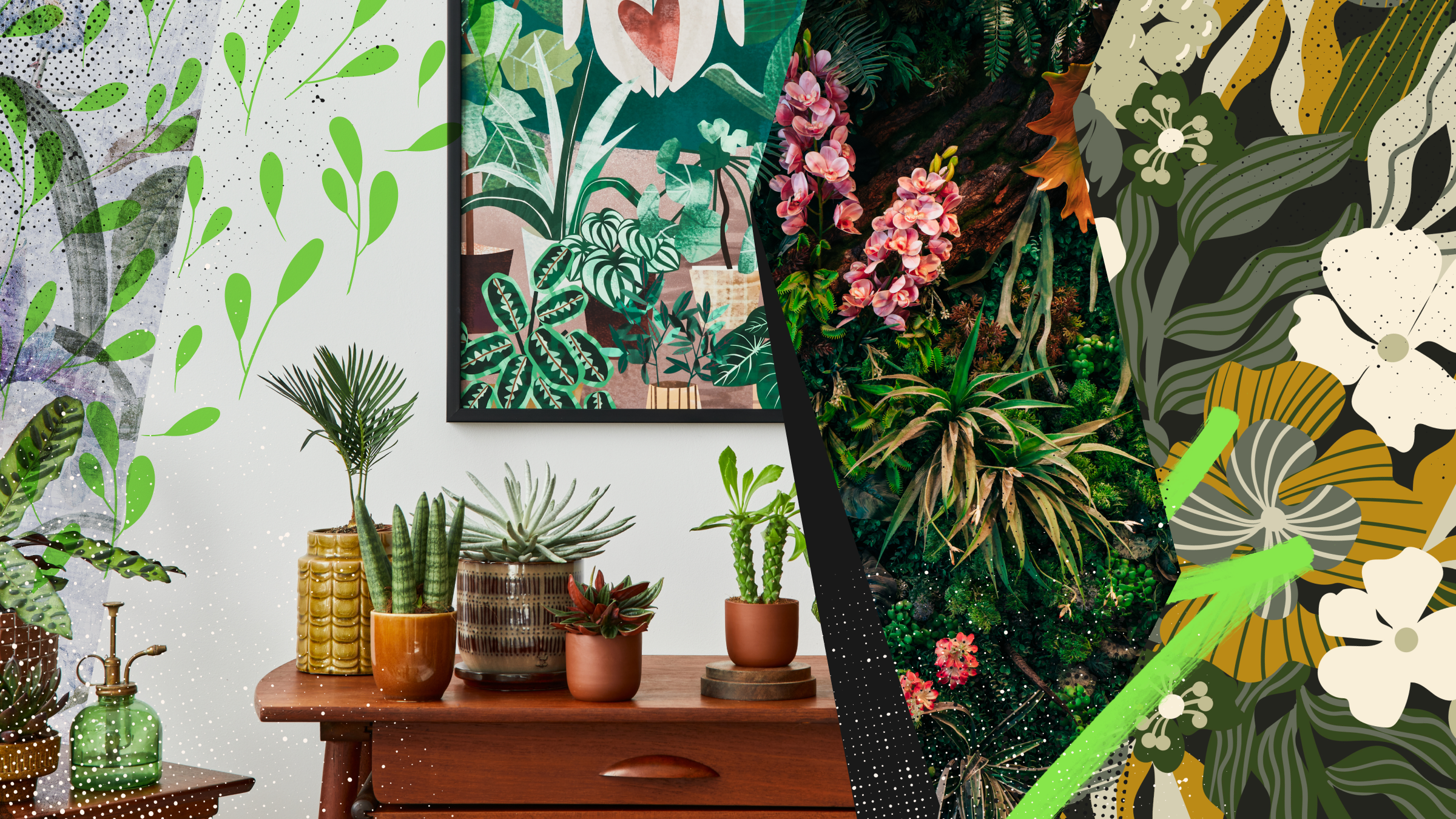
The Bold Botanicals trend celebrates lush growth and organic design, aiming to immerse viewers in a jungle-like garden.
In 2026, botanical design is bold and unapologetic. Designers are combining geometric shapes, maximalism, rich jewel tones, and moody Victorian aesthetics to update traditional Arts and Crafts influences for a contemporary audience.
Think less delicate florals, more dramatic foliage. This is botanical design turned up — denser, darker, and more theatrical.
Bold Botanicals hasn’t emerged from nowhere, as designers have been experimenting with floral design and biophilic design for many decades. However, the trend has gathered pace in recent years as consumers have begun to look for alternatives to futuristic, fast-paced aesthetics.
The Slow Living movement, which champions a mindful, nature-centric approach to consumption and lifestyle, has also influenced the growth of botanical design, and evolving interests in off-grid living, alternative lifestyles, and grow-your-own gardening have further fueled this environmental design trend.
We can also see Bold Botanicals’ connection to other trending design aesthetics, such as Cottagecore, Burrowcore, and Pattern Drenching, the latter of which unapologetically drenches spaces in head-to-toe botanical prints.
Far from an alt-lifestyle aesthetic, Bold Botanicals has recently gone mainstream in luxury fashion, product design, and branding, with brands like Gucci, DÔEN, and Ffern bringing botanical-inspired aesthetics to their customers.
What makes Bold Botanicals different from floral design? Botanical patterns and designs can include flowers, but botanical imagery tends to focus on foliage and green growth. This steers the aesthetic towards gothic Victoriana rather than quaint florals. See Bold Botanicals as the moodier sister to feminine floral designs.
Botanical patterns and designs can include flowers, but the key distinction lies in focus and mood.
Botanical design tends to lean toward Gothic-Victorian influences, while floral design often feels more romantic and delicate. Think of bold botanical design as the moodier, more immersive counterpart to traditional floral styles.
Craft aesthetics are having a moment in design. Running alongside tech-focused trends like AI, a new movement that values handcrafted items and nature-inspired design invites us to slow down and appreciate the quality of things that take time to make.
The Modern Craft Revival started in furniture and interior design, but has since crossed over to branding, graphic design, and fashion. Modern craft takes its cues from the original Arts and Crafts movement, which flourished in Britain and the US in the late 19th century, and was an artistic reaction against factory and machine production. Designers like William Morris and Charles Rennie Mackintosh championed nature-inspired patterns, motifs, and materials that were influenced by Medieval design and the rural countryside.
“Without dignified, creative human occupation people become disconnected from life.”
– William Morris
Today, mass production and digital technology have become almost inextricably intertwined with the design of any kind, whether product design or illustration. However, the spirit of the original Art and Crafts movement is retained through the choice use of techniques, materials, and aesthetics, drawing a connection between the original movement’s philosophy and a realistic approach to designing for the contemporary market.
And yes, even AI plays a part! Craft-focused designers are using evolving technology to generate ideas, experiment with crafty concepts before committing time to a project, and create animated content from hand-crafted imagery for social media campaigns.

The prompt used to create this image in ImageGen is:
Create a lush Victoriana glasshouse, with a jungle-like background, rich moody color palette and a woman in a green striped Victorian dress looking at the plants on display.
Fuelled by a growing interest in environmental design and natural living, Bold Botanicals is fast taking over the design world. In 2026, we’re seeing this natural design trend flourish across brand design, fashion, interiors, and illustration and photography. Discover botanical design inspiration to grow your own creative ideas…
Bold Botanicals brings verdancy to brand identities and packaging design, with the botanical trend most commonly seen in beauty and fragrance branding.
Perfumery Ffern has released a heady, botanical-inspired marketing campaign to promote its Spring 2026 fragrance, starring actor Claire Foy, while BaseNYC’s brand identity for the Huntington Library demonstrates how Bold Botanicals can translate beautifully into logo design, animation, and signage.
On the 2026 catwalks, we’ve seen designers experiment with a romantic take on the botanical theme. McQueen and Off-White have paraded watercolor botanicals and faded-glamor florals down the runway and red carpet (see Zendaya’s breathtaking turn in Atonement-esque McQueen), while Gucci has experimented with tropical prints that revisit jungle botanicals through an 80s-tinted lens.
A fusion of vintage design and botanical prints seems to be a fashion theme for this year, with Prada’s Victorian-gothic botanicals and Chloé’s retro-infused prints that make a nod to 1950s aesthetics. The message seems to be: however you take your botanicals, bold pattern is most definitely back.
Look to the original pattern design of English Arts and Crafts designer William Morris for ultimate Bold Botanicals inspiration. Heavily inspired by Medieval and Renaissance designs, his creations for wallpapers and fabrics are still in production today.
Taking a leaf from Morris’ book is illustrator and artist Giovanna Nicolo, who combines whimsy and psychedelia in her jewel-colored botanical artworks. Artist Lizzie Riches, known for her floral-saturated portraits, has also collaborated with department store Liberty, which in turn boasts its own Arts and Crafts heritage.
Photography is a natural home for Bold Botanicals, with a wide range of photography styles that bring a different flavor to still lifes or nature shots. Photographer Neave Bozorgi shoots otherworldly, ethereal botanicals in her studio, using soft-focus lens effects to create a dreamlike feel.
For product photography inspiration, look to plant-based beauty brand natureofthings, which has a quirky approach to marketing campaigns, featuring unposed street-style photography and raw product imagery that integrates botanical elements. For nature photographer Isabelle Goemine, black-and-white imagery lends foliage a theatrical drama.
For interiors, Bold Botanicals can make spaces feel cozier and more intimate, with earthy colors and cocooning, jungle-like wallpapers. Some of the biggest 2026 interior design trends include botanical tiles, natural wood, and growth-inspired paint colors, like chocolate brown and ‘muddy’ green.
Rethink how you use natural elements in your designs with Bold Botanicals, which offers an eclectic, theatrical alternative to traditional botanical design. The trend can be used effectively across website designs, social media posts, and packaging to encapsulate a fashion-forward, environmentally conscious mood.
Explore our edited Bold Botanicals collection, and read the top tips below for using botanical design in your own projects.
Bold Botanicals isn’t just greenwashing. This 2026 trend uses a broad and experimental color palette to push the boundaries of botanical design. Think unexpected pops of neon, rich jewel colors that evoke lush jungle backdrops, and moody, gothic darks like magenta, rust, and teal (another major 2026 color trend).
In line with the Pattern Drenching trend, have the confidence to throw the minimalism rulebook out the window (for now). Pattern Drenching is super on-trend in interior design for 2026, but the approach can also be applied to graphic design.
Try layering background patterns onto a landing page, teaming them with patterned borders and graphics, or fill a poster canvas with immersive botanical patterns, foregoing the usual ‘white space’ rules. Use contrasting typography in color-pop white or neon to keep messages legible.
Give photography and video an ethereal atmosphere with Victorian-inspired LUTs (Lookup Tables), presets, and actions for apps like Lightroom and Photoshop. Look for Photoshop actions that will deepen shadows for added drama, create richer green tones, and blur the edges of imagery for that dreamlike, glasshouse look.
Organic fonts and Victoriana typefaces can bring a botanical finishing touch to designs for flyers, social media, and websites. Arts and Crafts or Art Nouveau fonts, featuring curling letterforms and fluid ligatures, make the perfect companion to plant-based imagery.
Over time, botanical design has become more than a visual style — it’s a way for creatives to reconnect with nature, both aesthetically and emotionally.
Beyond its visual appeal, incorporating botanical design into everyday environments has been linked to improved well-being, focus, and creativity. That’s part of what makes bold botanical design so powerful — it’s not just about how things look, but how they feel.
In 2026, botanical design continues to evolve, blending historical influence with modern experimentation. With bold color, dramatic compositions, and immersive storytelling, this trend offers a fresh perspective on how we design with nature in mind.
Botanical design is inspired by nature, growth, and gardening, incorporating plants and natural materials into designs for digital and print media. Compared to floral design, botanical design tends to focus on foliage, or a combination of flora and fauna.
Biophilic design integrates natural forms, patterns, and materials into a design, and is most commonly applied in architecture and product design. Organic shapes, living walls, and the use of natural materials like wood and stone are common in biophilic design.
Botanical design works across branding, botanical website design, interiors, packaging, and illustration, especially for nature-focused industries.
Yes, botanical design is one of the biggest creative trends in 2026, especially in branding, interiors, and digital design.
Green is unsurprisingly a prominent color in botanical design, but with the Bold Botanicals trend, the color palette is broadened to include a wide range of hues, including neons, pastels, dark tones, and jewel tones.
Botanical design is no longer a quiet background aesthetic — it’s a bold, expressive force shaping creative industries in 2026.
If you’re looking to create work that feels immersive, emotional, and visually rich, bold botanical design offers the perfect foundation.
Turn your designs into a Victorian hothouse with Bold Botanicals, the new interpretation of floral design that’s taking over graphic design, branding, product design and interiors in 2026.
Explore movie typography trends shaping 2026, from bold film fonts to cinematic branding, with inspiring examples and practical tips for creating impactful, screen-ready typography.
Learn what font Disney uses, why it’s not downloadable, and discover Disney-style font alternatives to recreate that iconic, playful branding style in your own designs.
Explore PowerPoint templates with professionally designed layouts to create polished, modern, and visually cohesive presentations.
Learn what font Nike uses, explore its typography evolution, and discover Nike font alternatives to create bold, minimal, high-impact designs for branding and campaigns.