Movie typography in 2026: why does it suddenly look so good?
Explore movie typography trends shaping 2026, from bold film fonts to cinematic branding, with inspiring examples and practical tips for creating impactful, screen-ready typography.
Envato: Get every type of asset for any type of project, and access to AI tools. Start now
Logo and branding trends go multi-dimensional and multi-media for 2026, with sensory branding, kinetic logos and authentic brand experiences.
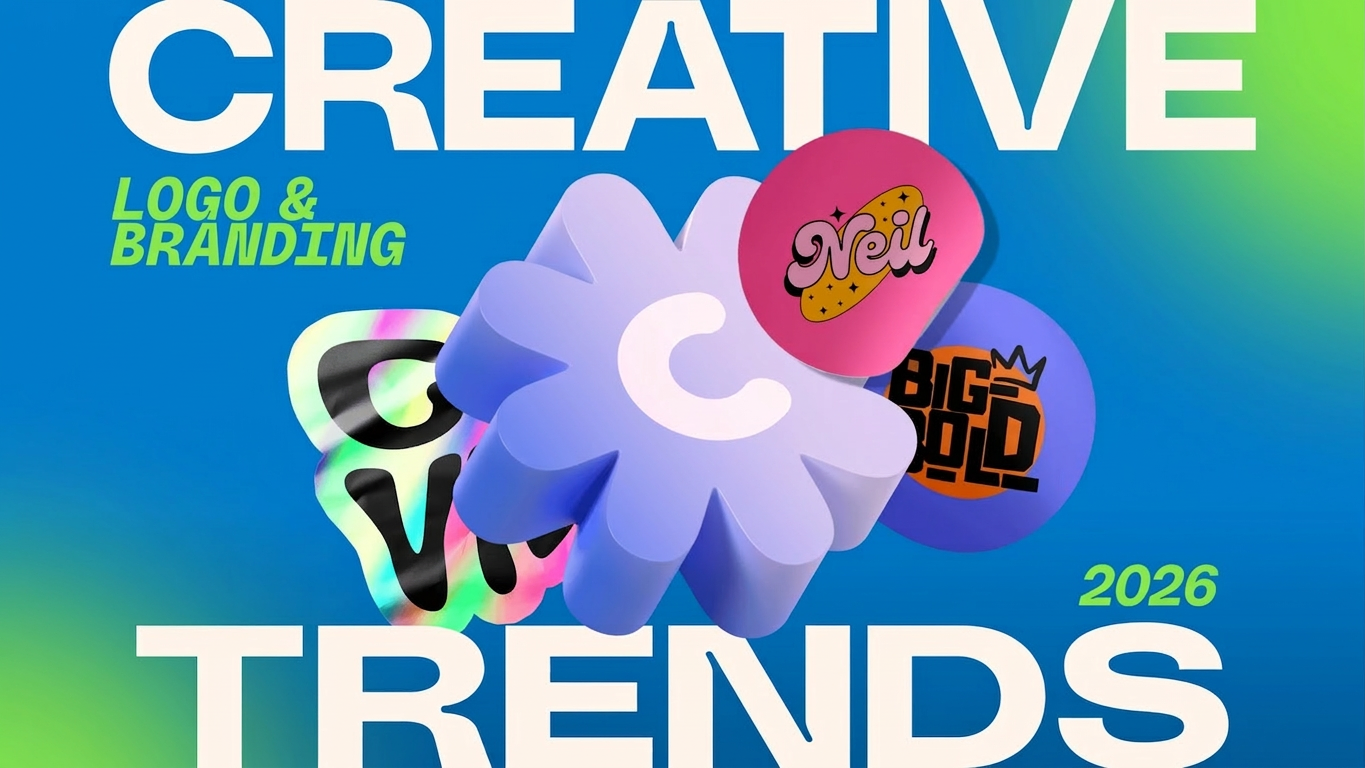
What is a brand, really? This is the big question going into 2026, with a Wild West atmosphere descending on the design industry as AI, TikTok, and experiential marketing reconstruct the meaning of branding from the ground up. Fret not—these fresh logo and branding trends 2026 will help you navigate this new era without a hitch.
Branding and logo design trends go multi-dimensional and multi-media in 2026, with a new branding landscape forged by a range of external influences, from cultural events and AI, to YouTube influencers and major movies. Motion logos and sonic branding boost the sensory appeal of campaigns, while agenda advertising and AI branding tools reshape what it means to design brands in 2026.
We’re also seeing the rise of ‘total branding’, in which any online or IRL moment can become a brand-defining touchstone. Exciting times indeed. Dive into these essential logo design trends and brand identity 2026 tips to build brands that hit the spot this year.
Logo design trends might seem fleeting, but they reveal larger truths about how consumers respond to brands, and culture as a whole. As culture and corporations collide on social media, it has become more difficult to distinguish between ads and authenticity, and brands who fail to navigate this successfully can quickly see themselves the subject of online derision (Sydney Sweeney and American Eagle, we’re looking at you).
However, if you’re a savvy brand expert, you can turn this new content-dominated landscape to your advantage. Brands can jump on the bandwagon of a head-turning viral event, or foster their own online legacy that spans not only the visual, but the agenda-fuelled, too. The most successful type of brand identity in 2026 goes further than skin-deep, building in narrative, opinion, and aesthetic into one compelling package.
For designers, there are plenty of creative opportunities to make a mark, as highly unique and diverse brand content plays into the preferences of audiences and algorithms. Graphic design trends reflect this pressing need for difference, from multi-sensory, sonic designs to smooth retro logos that combine nostalgia marketing with a contemporary stamp. While AI has ripped up the rulebook, it’s for the creatively adventurous to step boldly forward and set a new standard, whether with cutting-edge, AI-assisted design or authentic, human-centric branding.
Branding trends matter because they keep the cultural ball rolling…often into the complete unknown. So, are you game?
If you thought branding was limited to traditional campaigns, think again. In 2026, branding goes multi-dimensional, crossing media streams to incorporate a much wider range of outside influences. In the era of reels and TikTok, anything can become a defining moment for brands that might otherwise not have been drawn into a particular sphere, whether it’s a viral influencer review of a local barber, a sports event launching an agenda-loaded ad campaign, or a movie release setting the stage for a social media aesthetic that defines how people will shop in the year to come.
Call it the Wuthering Heights effect. The buzziest movie of the first half of the year became a huge aesthetic event, showcasing director Emerald Fennell’s uniquely garish eye for visual cinematic drama. Whether you loved it or loathed it, you can’t deny the brand power of this mega-movie. Cue a wave of 1980s type tributes, corset sales going through the roof…and an, erm, new consumer interest in latex.
The point is, every cultural event and every social media moment is now an opportunity for brands to put themselves in front of a completely captive audience, whether online or IRL. But if traditional campaigns no longer cut the mustard, how are brands adapting to this new era of total-experience branding? Agenda branding combines strong opinions with brand collabs to win minds, while multi-sensory design captures hearts. A wave of authentic branding that champions hand-crafted ads and logos aims to provide a stark contrast to AI-assisted branding which is becoming scarily good at winning over devotees.
In this Wild West of brand experimentation, challenges certainly lie ahead. With Gen Z now more likely to trust influencers than brands, according to a recent Adobe survey, brands have to work harder to integrate into the types of content that resonate with young audiences. Aesthetic uniqueness, AI wizardry and salt-of-the-earth authenticity all have their own place within the spectrum. Explore the diverse logo design trends and branding trends that are shaping 2026 into one of the most eclectic and innovative years of creativity we’ve had for quite some time.
What’s the message behind your brand designs this year? Whether you opt for AI impressiveness or authentic messaging, keep in mind that the best brand identities in 2026 are underpinned by serious substance.
Meanwhile, logo design trends embrace the eclectic mood, ranging from Childlike anarchy, with break-the-mould anti-design typography, to Slick retro type and Kinetic logos. Discover the most impactful 2026 branding trends and the creatives doing them well.
The edgy alternative to polished minimalism, anti-design has been a growing trend since Charli XCX’s Brat era. Anarchic design traits like ripped edges, grunge textures, and noisy overlays give branding projects a disruptive, analog feel — a welcome departure from overly digitized, clean design.
A trending type style to try out as part of a brand identity in 2026 is Childlike anarchy, which uses naive, handwritten fonts and scrawly doodle elements to make an ‘anti-brand’ statement. As a great example, London bakery Jolene has gained a cult following with its unusual logo, inspired by the handwriting of the studio founder’s six-year-old. These childlike fonts steer anti-design away from edgy grunge (and 90s design trends) toward more joyful branding, making it a perfect fit for food and beverage brands, entertainment, or artistic businesses.
If you thought branding only went skin-deep, think again. In 2026, the most impactful marketing and branding trends have an underlying agenda. While some brands choose to court controversy for the sake of clickable content, others are underpinning designs with meaningful messaging that makes a commentary on social, political or environmental issues.
Whether it’s Bad Bunny taking a ‘Together We Are America’ stance at the Super Bowl, or at the same event, pharmaceutical company Novartis advertising prostate cancer screening tests, brands that use their platforms to say something important are gaining more recognition from socially-conscious Gen Z consumers.
Cast your mind back to Nike’s 2018 Dream Crazy campaign, which saw 49er quarterback Colin Kaepernick, who had divisively protested police brutality during the national anthem two years before, headline a campaign that championed believing in something over potential sacrifice.
In 2026, we’re seeing more brands taking risks, using creative to take a stand, whatever the backlash. As Nike’s CEO Phil Knight famously said: “It doesn’t matter how many people hate your brand as long as enough people love it.”
The rules around socially-conscious branding are also under revision. Where once Agenda branding was gritty and sombre, now we’re seeing a lot more bold color and engaging animations, mirroring the style of more commercial design.
AI is growing in influence within the creative sphere (see below), but alongside its expansion is a movement that seeks to build Authenticity into branding. While this can be crafted using the help of AI technology, the important thing is that it looks and feels human-made.
Ford’s latest worldwide brand campaign uses grunge textures, rugged videography and polaroid imagery for a down-to-earth feel, while one of the buzziest recent brand campaigns has been carefully crafted by agency Wieden + Kennedy for Absolut Vodka’s new chilli-flavored tipple.
The campaign imagery features a model volcano, hand-built in a studio setting, while the video ad was filmed on location in Iceland’s volcanic fields. The manual effort is palpable, and the brand has already been rewarded with a hugely positive response on social media.
In 2026, logo design trends are more broadly reflecting this preference for authenticity, with brands like Polaroid, Patagonia and Hermès releasing logos and branding that feel genuine and unfiltered.
One of the most dynamic logo design trends and motion graphics trends for 2026 is Kinetic logos. These motion logos use quirky animation and interactivity to bring greater depth to branding on digital interfaces. Whether it’s letterforms that switch font style, or type logos that interact with visual icons, they’re a great way of keeping users engaged on websites and mobile app designs.
And while 3D animations and AI videos can make a stand-out impression, sometimes it’s the simplest animated quirks that work best. A case in point, hotel chain the Carlton Collection has embraced a kinetic brand identity in collaboration with D8 studio, which introduces fun and playfulness to the long-established brand.
For ultimate charm, combine motion logos with animated illustrations for Saul Bass-inspired wit, like talented studio Form Play Animation created for almond-based pasta brand Alpa.
Nostalgia marketing is still a powerful weapon in every marketer’s arsenal, but this year vintage design isn’t puritanical. Slick retro is a logo design trend that combines retro or vintage design with contemporary elements, bringing together the best of both worlds and adapting nostalgic design for the digital era.
So forgo vintage textures in favor of clean, glossy layouts, and incorporate animation or unusual color in branding projects for a modern feel. If you can look at a design and not pinpoint the era, you’re onto a winner.
An example to emulate? Pentagram created a Seventies-infused brand identity for Korean fried chicken restaurant COQODAQ, complete with a funky motion logo and retro color palette, pulled together into a sleek, contemporary style package for print and online. Meanwhile, branding studio AWP have created inspired gothic-retro branding for tampon brand Vampons.
Bring sensual memorability to brand and logo designs with multi-sensory or sonic branding. Sensory branding uses sound, tactile texture and 3D visuals to stimulate every human sense. It’s a clever way to lift your branding out from the digital sphere and forge an instinctual, emotional connection with the viewer.
Super-glossy, 3D liquid textures look touchable, if not drinkable, while designs that mimic fluffy, fuzzy textures tap into the cozy trend circulating on social media. Sonic branding, which uses sound to build an audio identity, also builds layers of sensory design into a user experience, from repetitive sounds that accompany website interactions to more subtle background audio that helps situate consumers immediately within the brand world.
We’ve seen some great recent examples of sensory branding from Squarespace, who collaborated with artist Jeff Koons for a tactile 3D campaign, and e-bike company VanMoof who worked with THNDR Studio to create a brand library of more than 400 custom sounds that intertwines unique, memorable audio with their products.
In 2026, it’s becoming about how you use AI, rather than if you use it.
AI design has come a long way in a very short time. More agencies and creatives are now confident in AI’s capabilities to assist in the design process, and many of the best 2026 projects employ AI branding tools to create unique visuals, audio and more. It’s now seen as an essential creative tool for building a complete branding project gradually, rather than a case of one-generation pot luck.
Indeed, the myth that exceptional AI creative takes no time at all is primed to be busted. Luxury fashion brand Moncler released an experimental film in collaboration with Google, which was completed in four weeks and used thousands of AI generations to ensure cinematic consistency. The result doesn’t feel like AI, just something beautiful and impressive.
Other brands experimenting with AI boundary-pushing include Vodka brand Svedka, who launched a completely AI-generated ad at the Super Bowl, and Artlist, who have stormed the branding world with sophisticated AI-created campaigns.
Great AI can take time and refinement, but with the right AI branding tools to hand, you can make your creative process more efficient without cutting corners. ImageEdit, for instance, offers in-built spot refinements powered by Nano Banana Pro, keeping you in the driving seat.
Yup, the AI backlash has started, but there’s a clear distinction between good AI design and Macquarie Dictionary’s 2025 Word of the Year, ‘AI slop’. If you let bad AI take the lead rather than your own creativity, the results can be…disturbing.
So avoid ScotRail’s disastrous fascist logo redesign (eek), and make sure to use AI branding tools that have been built with creative quality in mind. Use GraphicsGen to create standout logos and infographics, or try SoundGen for sonic branding that will put a unique stamp on your audio projects.
These logo and branding trends 2026 demonstrate how a simple logo no longer cuts the mustard. ‘Total branding’, in which different media, moments and designs are pulled together to create an immersive brand experience, is becoming standardized within the branding industry, and within brand design. 2026 logo design trends reflect this need for diversification, with interactive icons and Kinetic logos becoming the preferred identifier for mainstream brands.
In line with the overarching total branding trend, Sensory branding can be achieved through choice use of materials, textures and sounds. Look for liquid glass textures, tactile cozy materials and unique sound clips that pair beautifully with animated content.
AI-assisted brand design is another major 2026 trend that creative folk can easily tap into. Look to AI tools which build sensitive refinement into the generation process, allowing you to tweak as you work, rather than reinvent the wheel each time. Envato’s suite of AI design tools encourage a nuanced editing process, which maintains a consistent thread of human input and allows you to visualize ideas rather than simply deal with random output.
Alongside the meteoric influence of AI in logo and branding trends this year, it’s also important to place Authenticity at the heart of your brand projects. Hand-illustrated visuals, imperfect textures and craft-inspired elements all help to tap into this trend, while the Childlike Anarchy trend points to another aspect of authentic design, using naive handwriting and doodles to build brand designs with genuine soul. In your own brand projects, don’t be afraid of returning to manual design methods like hand-sketching and expressive writing—you might be astonished by the results.
The Slick retro trend also aims to bring back soul into the brand equation, and it offers endless creative potential, combining any number of vintage and contemporary styles. Try teaming groovy Seventies fonts with digitized gloss, or retro color palettes with sleek logo design.
Finally, Agenda branding is working hard to bring the meaning back into brand design. In your own branding projects, design choices can reinforce strong messaging. Raw videography, poster typography and campaign-style design can help your message hit home. We’re also seeing a lot more bold color integrated into socially-conscious branding, so don’t be afraid to use commercially-minded color palettes for serious topics.
Designing great branding should be an experimental exercise, but there are some common mistakes to avoid. Here are a few pointers:
At one time, designing a brand identity meant creating a visual identity consisting of logo and color palette. In 2026, the brand experience is more fluid and diverse than ever before, combining different media, cultural influences, social content and more, to craft branding that translates seamlessly to digital, print and experiential, in the hope of landing on the next viral moment.
To capture eyes, branding trends like Slick retro, Sensory design and Kinetic logos will bring scroll-pausing dynamism to branding projects in the year ahead. But to win hearts? Brand designs need soul and substance beyond sleek good looks. We’re seeing a wave of branding that emphasizes messaging and authenticity over sheer visual impact, competing for socially-minded Gen Z consumers and leaving a lingering impression.
In today’s branding landscape, visual design sets out to impress, often assisted by advanced AI technology and interactive, 3D design, but it’s the meaning behind the branding that marks out campaigns for success or shortfall.
In your own designs, a strong idea is the only foundation you need for incredible branding. And in terms of visualization? By using cutting-edge AI design tools and combining these with your own creativity, you can build a human-centric narrative into visual design that is guaranteed to resonate with your audience.
Hungry for more? Discover the freshest social media trends for designers and marketers to know about with our ultimate 2026 TikTok trends report.
Some of the biggest logo and branding trends for 2026 include Authenticity, Kinetic logos and AI-assisted brand design, which combine different visual styles and media with an undercurrent of human narrative. Stylistic trends for logos and brand fonts include Childlike anarchy and Slick retro.
Color in branding for 2026 revolves around an eclectic, diverse mix of palette choices. Bright, bold colors are starting to replace minimalistic palettes across logos and advertising, while strongly contrasting color palettes on mobile devices are making icon and logo design more accessible. Trending logo styles for 2026 include ‘anti-brand’ anarchic type,Kinetic logos and Slick retro logo design, which taps into nostalgia marketing.
You can find trending graphic design templates and video templates on the Envato library. Browse thousands of creative resources to help you pull together brand campaigns, social media designs and brand style guides.
AI’s impact on graphic design and branding is growing exponentially. In 2026, AI is becoming even more sophisticated, giving creatives the ability to generate multi-media campaigns that feature hyper-realistic visuals and videos. While some studios are choosing to specialize in generating solely AI output, other creative businesses are instead opting for an assistant-based approach, using AI as a tool for channeling human ideas and creative source material.
To give your small business a brand refresh in 2026, look at lending animation or interactivity to static designs, transforming logos into Kinetic logos or building in sensual textures and sonic branding to boost Sensory branding, creating a more immersive experience for your customers on websites and social media.
Explore movie typography trends shaping 2026, from bold film fonts to cinematic branding, with inspiring examples and practical tips for creating impactful, screen-ready typography.
Explore the bold botanical design trend shaping 2026, from lush patterns and floral design to branding, interiors, and nature-inspired creative projects rooted in biophilic aesthetics.
Learn what font Disney uses, why it’s not downloadable, and discover Disney-style font alternatives to recreate that iconic, playful branding style in your own designs.
Explore PowerPoint templates with professionally designed layouts to create polished, modern, and visually cohesive presentations.