The best AI tools for image recreation
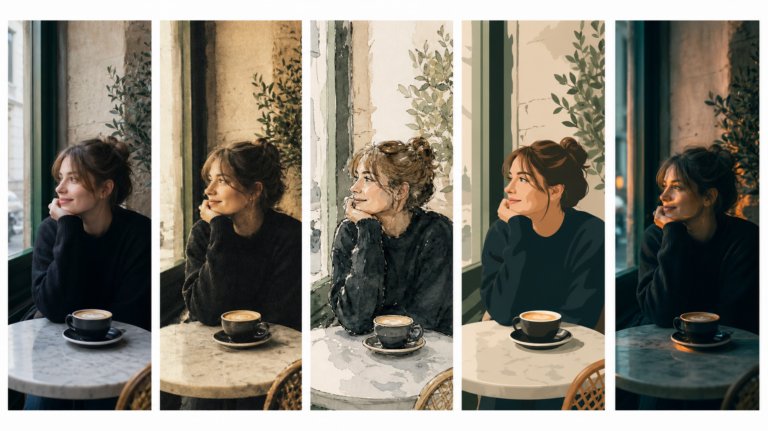
AI image recreation covers style transfer, reference-based generation, variations, and scene recreation. This guide compares the tools that handle each workflow for professional creative work.
Envato: Get every type of asset for any type of project, and access to AI tools. Start now
The most interesting shift in AI-generated images isn't what the tools can do — it's what creatives are choosing to do with them.
A year ago, the conversation about AI-generated images was still mostly about capability. Can the models produce something that looks real? Can they render hands? Can they handle text? Those were reasonable questions at the time, and the answers kept changing month to month.
In 2026, the capability question is largely settled. The latest generation of models — across Flux, Seedream, Nano Banana, GPT Image, and others — renders skin texture, lighting behavior, and environmental detail at a level that makes AI-generated images functionally indistinguishable from photographs in many professional use cases (when paired with the right prompting and models). The hands problem still surfaces occasionally, but it’s no longer the defining limitation it was even 12 months ago.
What’s replaced the capability conversation is something more interesting: aesthetics. Now that AI can produce almost anything, the question has shifted to what it should produce — and the answers are reshaping how commercial creative work looks, feels, and gets made. These are the trends in AI-generated images and photography that actually matter for working creatives right now.
This is the biggest shift, and it’s happening across social platforms, advertising, and editorial work simultaneously. Audiences have developed an almost instinctive sensitivity to the “AI look” — the uncanny smoothness, the evenly diffused lighting, the slightly too-perfect skin, the compositions that feel optimized rather than observed. The response from creatives has been a hard pivot toward imperfection.
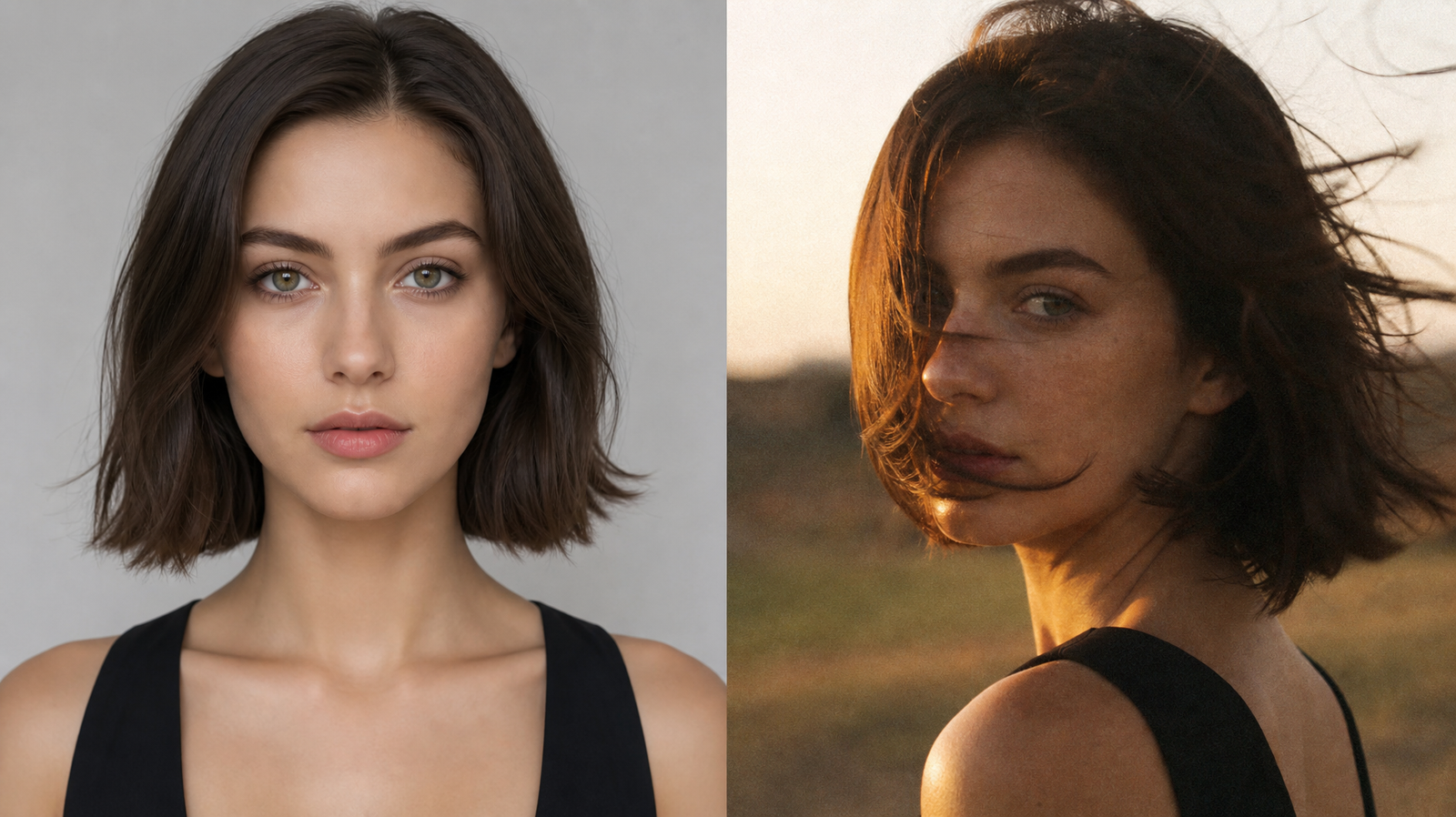
The aesthetic that’s gaining the most traction deliberately mimics the artifacts of physical media: direct flash photography with blown highlights, hazy film textures and light leaks, off-kilter framing that suggests a candid moment rather than a staged composition. Analog film looks — Kodak Portra color palettes, visible grain, the slightly lifted blacks of underexposed negatives — are being applied to AI-generated images specifically to push them away from the hyper-polished default.
This isn’t a rejection of AI. It’s a maturation. Creatives have figured out that the most effective AI-generated images are the ones that don’t look like they were generated at all. Envato’s style presets reflect this shift — presets like 35mm Time Capsule, Disposable Camera, and Analog Diffraction exist because the demand for analog-feeling digital output is now a mainstream production need, not a niche aesthetic choice.
If you’ve been following the broader photography trends shaping 2026, this tracks. Candid, documentary-style imagery is outperforming polished studio work across platforms. AI-generated images are following the same trajectory — the output that resonates is the output that feels human.
For most of AI image generation’s short history, every prompt produced a stranger. You could describe the same person in the same outfit in the same setting, and the model would hand you someone different every time. That made AI useful for one-off concepts but nearly useless for anything that required visual continuity — campaigns, narratives, serial content, brand characters.
That limitation has meaningfully eroded in 2026. Reference-based workflows now let you upload a character image and maintain that identity across multiple generations. Models like Nano Banana Pro and Seedream 4.5 preserve faces, body proportions, and stylistic details with enough fidelity that creators can build genuine visual narratives — the same character in different scenes, wearing different outfits, in different environments, all recognizably the same person.
The practical impact is significant. Campaign teams can develop a visual identity around an AI-generated persona and carry it across dozens of assets. Concept artists can iterate on character designs without losing continuity. And the image-to-video pipeline — generating a controlled still and then animating it — produces far more consistent results than text-to-video alone, because the character’s identity is anchored in the source image rather than interpreted fresh from a text description. Envato’s character swap Shortcut is one example of this workflow in practice: keep the scene intact, swap the character, and maintain visual coherence across variations.
Cinematic lighting, rich color grading, and filmic texture are no longer differentiators in AI-generated images — they’re the baseline. Models in 2026 handle Rembrandt lighting, golden hour warmth, neon-lit night scenes, and high-key fashion setups with a level of precision that makes “cinematic” the default aesthetic rather than an aspirational one.
This matters because it’s raised the bar for what counts as production-ready. A year ago, generating an image with convincing rim lighting and accurate shadow falloff was impressive. Now it’s expected. The competitive edge has moved from “can the model render good light?” to “can you direct the model to render the specific light you need for this particular brief?”
That’s where prompting technique still makes a meaningful difference. Describing a lens focal length, a light direction, and a color temperature produces dramatically different results than a vague “cinematic” modifier — and creatives who already understand how light and cameras work have a real advantage. If you’re building cinematic AI images for client work, the prompting fundamentals outlined in our guide to realistic AI image prompts translate directly.
The early days of AI image generation rewarded people who could write elaborate, technically specific prompts. That’s still useful, but the workflow is shifting. In 2026, the dominant pattern for most professional use is: select an aesthetic preset, write a concise description of what you want in the frame, and let the style layer handle the technical parameters.
This is a meaningful change in who gets good results. When prompting required deep knowledge of model-specific syntax and negative prompts and weighted tokens, the learning curve favored technical users. With preset-driven workflows, the advantage shifts back to creative judgment — the ability to recognize which aesthetic fits the brief, which is exactly the skill set professional designers and art directors already have.
Envato’s AI image generator leans heavily into this pattern. The model is selected automatically based on the prompt, and style presets shape the aesthetic before you generate. The result is a workflow where the creative decisions — what’s in the frame, what mood it sets, what story it tells — stay with the creative professional, while the technical execution is handled behind the scenes.
This one’s counterintuitive, but the data supports it. As AI-generated images have become ubiquitous — filling social feeds, populating e-commerce listings, illustrating articles — genuine captured photography has actually gained value. Getty Images launched new subscriptions in 2026 specifically positioned around AI-free, authentic imagery — a signal that the market for real photography isn’t shrinking, it’s being redefined.
For creative professionals, this creates an interesting dual workflow. AI handles the volume — concept variations, background options, placeholder visuals, A/B test assets, social content at scale. Photography handles the authenticity — hero imagery, editorial features, brand storytelling where the “this actually happened” quality matters.
The most effective production workflows in 2026 aren’t choosing between AI and photography. They’re using both — AI for speed, volume, and exploration; photography for trust, texture, and the irreplaceable quality of a real moment. Stock photography plays a role here too: starting with a real photograph and editing it with AI to fit a specific brief gives you the authenticity of a captured image with the flexibility of generative editing.
Behind the aesthetic shifts, two structural changes are reshaping how creatives choose and use AI image tools — and they’re arguably more important than any visual trend.
The first is multi-model orchestration. The best AI-generated images in 2026 aren’t coming from a single model. They’re coming from tools that route prompts to the right model automatically — photorealistic requests to one engine, illustrative work to another, text-heavy compositions to a third. The creative professional focuses on direction; the tool handles the technical routing. This is how Envato’s image generator works in practice, and it’s increasingly the standard that professional tools are converging toward.
The second is licensing clarity. As AI-generated images move deeper into commercial production — campaign assets, client deliverables, product packaging — the question of whether you can actually use what you’ve generated has become a serious selection criterion. Creatives are choosing tools based on licensing confidence as much as output quality. A gorgeous image you can’t clear for commercial use is a gorgeous image you can’t ship. Every download and generation on Envato comes with a lifetime commercial license, which is one reason the licensing conversation has become a competitive differentiator rather than fine print.
The trajectory is clear enough to be useful without pretending anyone can predict the specifics. AI-generated images are moving from “impressive output” to “integrated production tool” — less novelty, more workflow. The aesthetic pendulum is swinging from perfection toward authenticity, which favors creatives who understand what makes an image feel real over those who can write the most technically elaborate prompt.
The creatives who are navigating this well aren’t chasing every new model release. They’re building workflows — guided AI workflows, reference-based generation, style-preset-driven iteration — that make AI image generation a repeatable production step rather than an unpredictable experiment. The tools are getting better every month. The skill that compounds is knowing what to ask for.
The most significant trends include a deliberate shift toward imperfect, analog-inspired aesthetics; character consistency across multiple images; cinematic quality becoming the baseline rather than a differentiator; style presets replacing complex prompt engineering; and real photography gaining value alongside AI as a complementary workflow rather than a competitor.
Character consistency refers to the ability to maintain the same person’s appearance — face, body proportions, and stylistic details — across multiple AI-generated images. In 2026, reference-based workflows and models like Nano Banana Pro and Seedream 4.5 handle this with enough fidelity to support campaigns, narratives, and serial visual content.
Style presets are curated aesthetic settings that shape the visual output of an AI image generator — handling parameters like color science, grain, tonal range, and rendering approach. They matter because they shift the advantage from technical prompt-writing to creative judgment, making it easier for designers and art directors to get the aesthetic they want without writing elaborate prompts.
Beyond output quality, prioritize licensing terms (especially for commercial work), workflow integration (can you edit and iterate without switching tools), style controls (presets and reference-image support), and multi-model routing (the tool selects the best model automatically rather than requiring you to choose). Envato’s AI image generator covers all four within a single subscription.
Not in the way early predictions suggested. AI handles volume, speed, and concept exploration well, but authentic photography carries a premium in contexts where trust and real-world texture matter. The most effective workflows in 2026 use both — AI for scale and iteration, photography for editorial and brand storytelling.
AI models are trained heavily on retouched stock photography, so their default output inherits that over-polished look — smooth skin, flat lighting, uniform sharpness. The fix is specificity: describing lens characteristics, light direction, film grain, and natural imperfections in your prompt steers the output toward something that feels photographed rather than rendered.
Common commercial applications include concept variations and pitch visuals, campaign asset production, product photography alternatives, social media content at scale, and A/B testing visual directions. Licensing clarity — knowing the generated image is cleared for commercial use — has become a major factor in tool selection for professional work.
Header image created with Envato’s AI image generator.
AI image recreation covers style transfer, reference-based generation, variations, and scene recreation. This guide compares the tools that handle each workflow for professional creative work.
Discover how Envato's AI sound generator creates custom sound effects from text prompts so creators can skip library searches and edit faster.

We tested 9 AI image generators on identical artistic prompts (same style-transfer task, same day) to see which one actually paints like an artist.
AI isn't making full movies yet; it's reshaping VFX, editing, and dubbing. Here's where it helps filmmakers today, and where it doesn't.