The best AI tools for image recreation
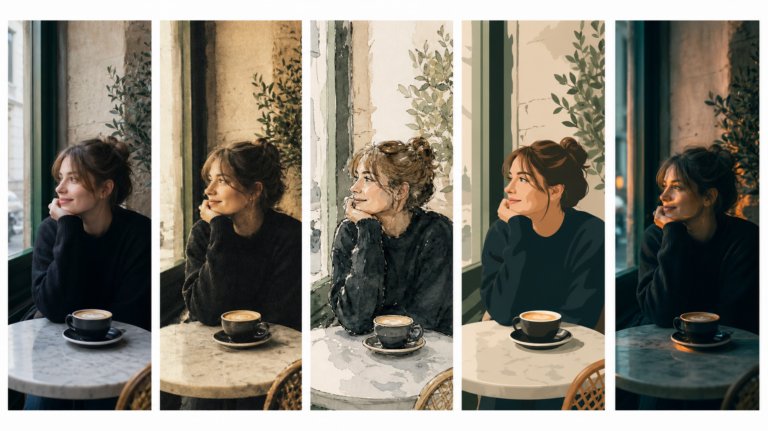
AI image recreation covers style transfer, reference-based generation, variations, and scene recreation. This guide compares the tools that handle each workflow for professional creative work.
Envato: Get every type of asset for any type of project, and access to AI tools. Start now
Editor and filmmaker Ayush Vishwakarma shares how editing creates emotion, why silence matters, and the creative process behind storytelling.

“We don’t talk without stopping. We pause. We think. As editors, we should communicate the same way.”
There is an infectious, creative energy when you first meet Ayush Vishwakarma. That same energy is evident in his work. And the more time you spend with him, it quickly becomes clear that this stems from a deep love for film and the magic it creates. In Ayush’s case, rather literally.
“The first thing I remember watching on television was the Harry Potter films. Movies were magic from that moment.
“I remember drawing scenes and ideas in my notebooks because I wanted to create things like that myself. Then, when I finally got my first laptop, I couldn’t wait to start editing.”
And he hasn’t stopped since. A prolific editor and YouTuber, Ayush is constantly producing content that flexes his creative muscles, showcases his editing skills, and explores the wonderful world of filmmaking and storytelling.
We caught up with Ayush at his home in India to explore his creative process, his editing must-haves, and his time-traveling experience editing across seven decades of film.
Envato: Tell us a little about where you’re from, how you grew up, and how you fell in love with film and editing.
Ayush: I’m from India. India is very loud, and Indian films are, too.
I grew up watching both Indian films and Western films, and they’re very different. Eventually, I stopped just watching the performances. I started noticing the editing and the visual effects and wondered how everything was made.
How did they make this? How does this scene work? Why are there so many cuts here?
I became fascinated by the process.
Indian films are naturally louder and faster. As I developed my own style, I had to consciously move away from that and work toward slower, more cinematic storytelling. That said, I still carry something from Indian cinema with me. When I need fast-paced sequences or energetic cuts, I definitely draw inspiration from Indian films.
It feels like those early moments are really the seeds of creative obsession. What does creative obsession mean to you?
I think I’m obsessed with almost everything I do. But creative obsession is different.
When I’m working on a project, I want to completely surround myself with it. My room is covered in sticky notes, pages, sketches, and ideas. Everywhere I look, I am thinking about the project. I like being completely immersed in the work.
I’m always chasing that feeling.

The premise of your video is that every era of editing was really a response to what was happening in the world. It wasn’t just a stylistic choice. When did you start thinking about editing that way — not just as a technical skill, but as a cultural language?
That’s a really good question. Earlier in my career, I was purely an editor working for clients. I did client work for about two or three years, mostly corporate projects. I wasn’t creating anything for myself. Everything changed when I made my first vlog.
When I started editing my own footage, it completely changed the way I thought about editing. Suddenly, I realized there were countless directions a single edit could take. I had unlimited ideas.
That made me start exploring filmmaking and editing techniques, and how editors create emotion and tension. I became fascinated by why certain editing techniques worked.
Why do editors use macro shots here? Why do they use wide shots there? How does sound design change a scene?
I started reading books about filmmaking because I realized something important. Editing is only successful if it creates a response. That’s how I see editing now.
If the audience feels something, then the edit has done its job.
For each of the seven decades you recreated, you used different parts of the Envato toolkit. Music inspired by the ’70s, typography, motion graphics, color treatments… was that the range you expected going into the project?
The biggest surprise was that everything was in one place. Without those assets, it probably would have taken me two months. Instead, I could spend my time creating rather than searching.
I’d download something, then completely transform it into something different. I rarely used a template exactly as it was designed. I’d tweak it, rebuild it, and make it fit my own style. That’s what I loved.
The assets weren’t just things I used — they helped shape the project’s direction.
Did you get a chance to use any of the Gen AI tools as part of the process?
Yeah, I used quite a few of them. One of the biggest ones was the AI image generator. I used it almost like a storyboard. Normally, I’d sketch ideas on paper, but that takes time. Instead, I could generate an image of myself in the exact environment I was imagining. Most of the time, it was incredibly accurate.
It helped me visualize shots before I even picked up the camera.
You recreated editing styles from the 1960s right through to the modern day. Of those decades, which one genuinely surprised you the most while you were researching it?
Probably the 2010s. When I was actually living through that decade, I wasn’t watching many films from that period. I was mostly watching movies from the early 2000s and even the ’90s. So I didn’t really understand what defined the 2010s until I went back and studied them.
As I watched more films, I began to notice a common emotional thread. For me, it was loneliness. Not everyone will agree with that interpretation, but that’s what I kept seeing. There might be chaos happening around the character, but emotionally, they’re isolated.
The editing constantly reinforces that feeling.
For people who haven’t watched the video, what are some of those editing techniques that communicate loneliness?
Directors and editors use a lot of visual language.
One example is simply showing someone eating alone. It sounds simple, but it’s an incredibly lonely image. I always think of Breaking Bad. There are scenes where Walt eats alone, and they immediately evoke that feeling of isolation.
Another technique is using very wide shots with only the protagonist in frame. Or showing a completely still character while the world around them is moving. There’s chaos everywhere, but emotionally, they’re disconnected from it. Those kinds of visual choices appeared again and again in films from that period.
Once I noticed the pattern, I couldn’t stop seeing it.
You said that modern editing — including your own — is genuinely terrified of silence. After watching both your Envato video and a lot of your YouTube work, it feels like you’ve really come to appreciate silence. Was that something you had to learn, or did it happen naturally?
I think it was a mixture of both. If you go back and watch my first YouTube videos from three years ago, they’re incredibly fast. They barely give you two seconds to breathe.
Now I’m comfortable putting five seconds of silence into a video. I’m confident that silence won’t make people leave.
I realized people need space. There’s this assumption that YouTube has to be constant stimulation — fast cuts, fast cuts, fast cuts. I don’t believe that’s true anymore. You just have to find the right balance.
Silence is incredibly important. It’s something I could never remove from an edit.

That actually leads perfectly into the next question. What’s something that’s completely non-negotiable in your creative process?
Texture. I’m obsessed with finding the right textures for every project. The edit has to feel like what it’s talking about.
For example, if I’m creating UI animations, I’ll add subtle glows, bevels, reflections — little details that make everything feel polished and digital.
But if I’m making something documentary-driven, like a Johnny Harris-style piece, I’ll add paper textures, grain, noise, grunge — anything that makes the footage feel grounded and tactile.
Those textures help people feel the subject matter. I don’t think I’d ever compromise on that, no matter the deadline.
Earlier you said something that’s really stuck: “editing is only successful if it creates a response.” By the end of this project, how had that changed the way you think about your own work?
I already knew many of the editing techniques, like jump cuts and other fundamentals, but seeing them work in practice unlocked something for me. I hadn’t fully understood how dramatically editing styles — and the emotions behind them — had evolved over time.
As I researched each era, I began to see how different emotions could be communicated through very different techniques. That changed the way I think about editing. Now I feel like I have so many more tools to bring to future projects.
It wasn’t just about recreating history. It expanded the way I think about storytelling.
—
Watch Ayush’s video – I Recreated Seven Decades of Editing in One Video
You can find Ayush on:
AI image recreation covers style transfer, reference-based generation, variations, and scene recreation. This guide compares the tools that handle each workflow for professional creative work.

Discover how Envato's AI sound generator creates custom sound effects from text prompts so creators can skip library searches and edit faster.

We tested 9 AI image generators on identical artistic prompts (same style-transfer task, same day) to see which one actually paints like an artist.
AI isn't making full movies yet; it's reshaping VFX, editing, and dubbing. Here's where it helps filmmakers today, and where it doesn't.