AI video Blender: how to turn AI clips into cinematic 3D shots
Learn an AI video Blender workflow to transform AI-generated clips into fully controlled 3D cinematic scenes using camera animation, lighting, fog, and layered overlays.
Envato: Get every type of asset for any type of project, and access to AI tools. Start now
3D characters have taken the world of entertainment, popping up everywhere from blockbuster movies to the latest video games!

They make us believe in fantastic creatures, connect us to brave avatars, and restore beloved actors to their early years! But 3D characters weren’t always this convincing. The transformation from primitive pixelated sprites to the latest lifelike characters has included various technological breakthroughs and a few missteps.
Let’s dive into the fascinating evolution of 3D characters, starting from the early days, through the groundbreaking creation of Gollum, and all the way to today’s stunning digital humans and avatars. Whether you’re a movie fan, a gamer, or just interested in how these digital 3D characters come to life, we’re here to explain their evolution.
While 3D characters look impressive now, their history actually goes back more than a few decades. By today’s standards, the early attempts were quite modest, but they created the base for everything that has happened since.

The late 1970s and early 1980s were the time for the first experiments into 3D animation. Movies like Westworld (1973) and Tron (1982) introduced audiences to the concept of digital characters and imagery, but the characters were more abstract than lifelike. These early visuals came about using basic computer graphics alongside wireframe models, offering us our first look into the future of these digital characters.

A big milestone in 3D animation came with Young Sherlock Holmes (1985), which featured one of the first fully computer generated characters in the stained glass knight. This short sequence was an incredible technical achievement back then, marking one of the earliest times a 3D character interacted with live-action footage.
Created by the talented team at Industrial Light & Magic (ILM), the stained glass knight showed just how powerful CGI could be for storytelling, paving the way for even more complex 3D characters in the years that followed.

As movies were advancing in CGI, the video game industry was investigating with 3D characters in its own way. Early 3D games, like Virtua Fighter (1993) and Tomb Raider (1996), introduced players to characters built using simple polygons. These characters were blocky and limited in detail, but they represented a significant leap from the 2D sprites gamers were used to at the time. With each new game, developers pushed the boundaries, making characters more lifelike and complex.

In the early days, 3D characters were often criticized for their stiff movements and their simplistic look. Technical limitations meant that animations were basic, textures were flat, and there weren’t many details. However, these first attempts were charming in their own right, capturing the imagination of audiences and hinting at a future where digital characters could one day become indistinguishable from reality.
CGI characters have come a long way since their early days, each pushing the boundaries of technology and storytelling in their own special way. Let’s dive into some of the standout CGI characters that have made movie history!

The Stained Glass Knight in Young Sherlock Holmes was one of the first fully computer-generated characters in a live-action film. Although the character only appeared briefly, the knight was revolutionary for its time.
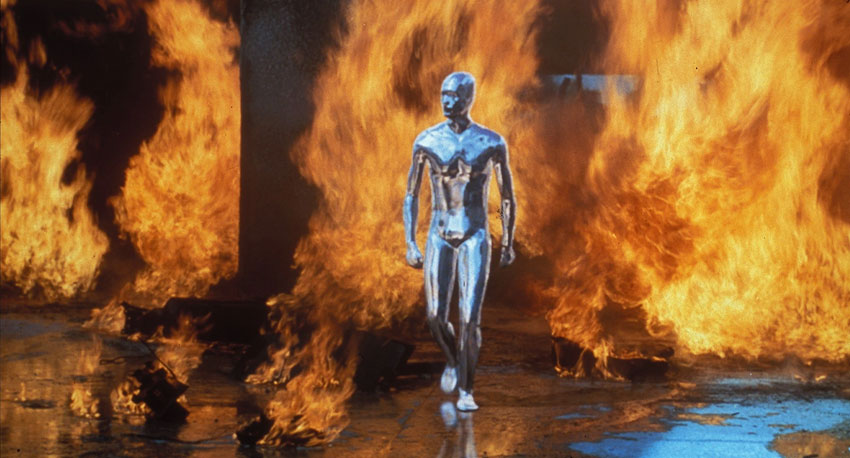
The T-1000, portrayed by Robert Patrick, was a liquid metal assassin that could morph into anything it touched. This amazing character set the new standard for visual effects with its impressive shape-shifting abilities.

Jurassic Park was an important landmark in film, bringing to the big screen realistic looking dinosaurs with a combination of animatronics and CGI. The T-Rex and Velociraptors were so lifelike at the time, that they convinced audiences and critics alike that this technology could be used to create believable, large-scale creatures.

Jar Jar Binks was a significant technological milestone as the first fully CGI character to interact with live-action actors throughout an entire film. ILM’s work on this character demonstrated the evolving improvements to CGI.

Gollum, the twisted and tragic creature from The Lord of the Rings, is a landmark in CGI history, setting new standards for digital character creation with his lifelike expressions, complex personality, and ground breaking blend of performance capture and animation.

Peter Jackson’s King Kong brought the iconic ape to life with an unprecedented level of realism and emotion. Using motion capture technology, Andy Serkis played a pivotal role, infusing Kong with personality, vulnerability, and raw power.

Davy Jones, played by Bill Nighy, was a complex blend of motion capture and CGI that raised the bar for digital character design. With his tentacle beard and intricate, otherworldly features, Davy Jones was so lifelike that many viewers assumed parts of him were created using practical effects.

James Cameron’s Avatar introduced audiences to the Na’vi, a race of blue-skinned aliens whose lifelike performances were brought to the screen using advanced motion capture technology.

Caesar was yet another performance by the talented Andy Serkis and is widely regarded as one of the most sophisticated CGI characters ever created. Through motion capture, Serkis’s performance gave Caesar depth, intelligence, and emotional weight, turning him into a fully realized character who could carry the entire film on his shoulders.

Thanos, played by Josh Brolin, is one of the most complex and detailed CGI characters in cinematic history. His realistic skin textures, subtle facial expressions, and powerful presence made him a truly formidable villain (indeed, one of many’s favorite villains!).

In the early 2000s, Gollum changed history with his performance in The Lord of the Rings trilogy. He deserves a special mention here because he was the first CGI character to blend motion capture performance with digital animation, delivering an emotional depth and realism to a fully animated 3D character. His performance resonated so deeply with audiences that it revolutionized the film industry’s approach to CGI.
While Gollum wasn’t the first 3D character on screen, he was the first to truly blend digital animation with human performance, setting a whole new standard for what we thought was possible.
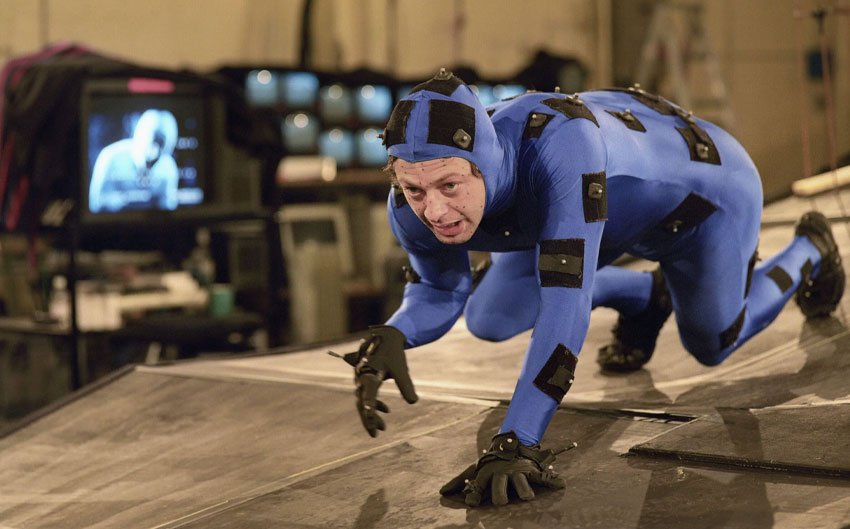
What made Gollum unique was the combination of performance capture and leading CGI. Using his outstanding physical and vocal skill, actor Andy Serkis used a motion capture suit that had small markers to record his actions. His facial expressions, gestures, and even his eye movements were recorded and translated into digital form at Weta Digital.

The real triumph of Gollum was his emotional depth. Audiences could see the internal conflict between his two personalities of Gollum and Sméagol. The scene would play out on his face in a way that felt real and heart breaking. Weta Digital’s animators painstakingly crafted every twitch, snarl, and tear to match Serkis’s performance, blending animation and live-action in a way that brought a level of humanity to a digital character.
The success of Gollum marked an important moment for the entire entertainment industry. His creation demonstrated that 3D characters could be more than just special effects, and they could become important and emotionally significant parts of the story. Inspired by Gollum, filmmakers and game developers have begun to look into how they can use performance capture alongside advanced animation to create their characters.
One of the most significant factors in 3D character creation has been the continuous improvement of rendering and animation techniques. These updates allow designers to produce virtual characters that perform and appear more realistically than previous generations, nearly coming across as identical to their real-world counterparts.

Thanks to changes in rendering methods, characters are now more photorealistic than ever and interact with light and materials in a way that feels more natural.

Current techniques in animation allow digital characters to move and convey themselves in increasingly convincing ways.

Thanks to new real-time rendering technologies, like those found in Unreal Engine, the creation of digital characters and how they are used is evolving yet again.

And there we have it! The evolution of 3D characters, from simple wireframes to stunningly lifelike digital beings, has completely transformed storytelling in film, TV, and video games. From the groundbreaking creation of Gollum to the mind-blowing realism of characters like Thanos and Caesar, each tech leap has opened up thrilling new possibilities.
Interested in taking your 3D skills a step further? Check out Envato’s newly souped-up 3D offering with thousands of creative assets you can use with Blender, Spline, and more. And while you’re here, don’t forget to take a look at our predictions for 3D design trends of 2025, including squishy 3D textures, or check out our guide to AI character design workflow.
Learn an AI video Blender workflow to transform AI-generated clips into fully controlled 3D cinematic scenes using camera animation, lighting, fog, and layered overlays.

3D design is evolving fast in 2026, from Blender-powered films to Plushcore mascots, glossy product renders, lo-fi nostalgia, and AI-assisted workflows. Explore the trends reshaping animation, branding, and motion graphics this year.

There’s something squishy going on out there in the world of 3D and motion design.

To what degree has AI penetrated the workflow of 3D professionals, and what’s actually possible nowadays?