Movie typography in 2026: why does it suddenly look so good?
Explore movie typography trends shaping 2026, from bold film fonts to cinematic branding, with inspiring examples and practical tips for creating impactful, screen-ready typography.
Envato: Get every type of asset for any type of project, and access to AI tools. Start now
We chat to industry-leading designer and coder Talia to learn how she's pushing the boundaries of design through coding, and get her top tips for aspiring designers.
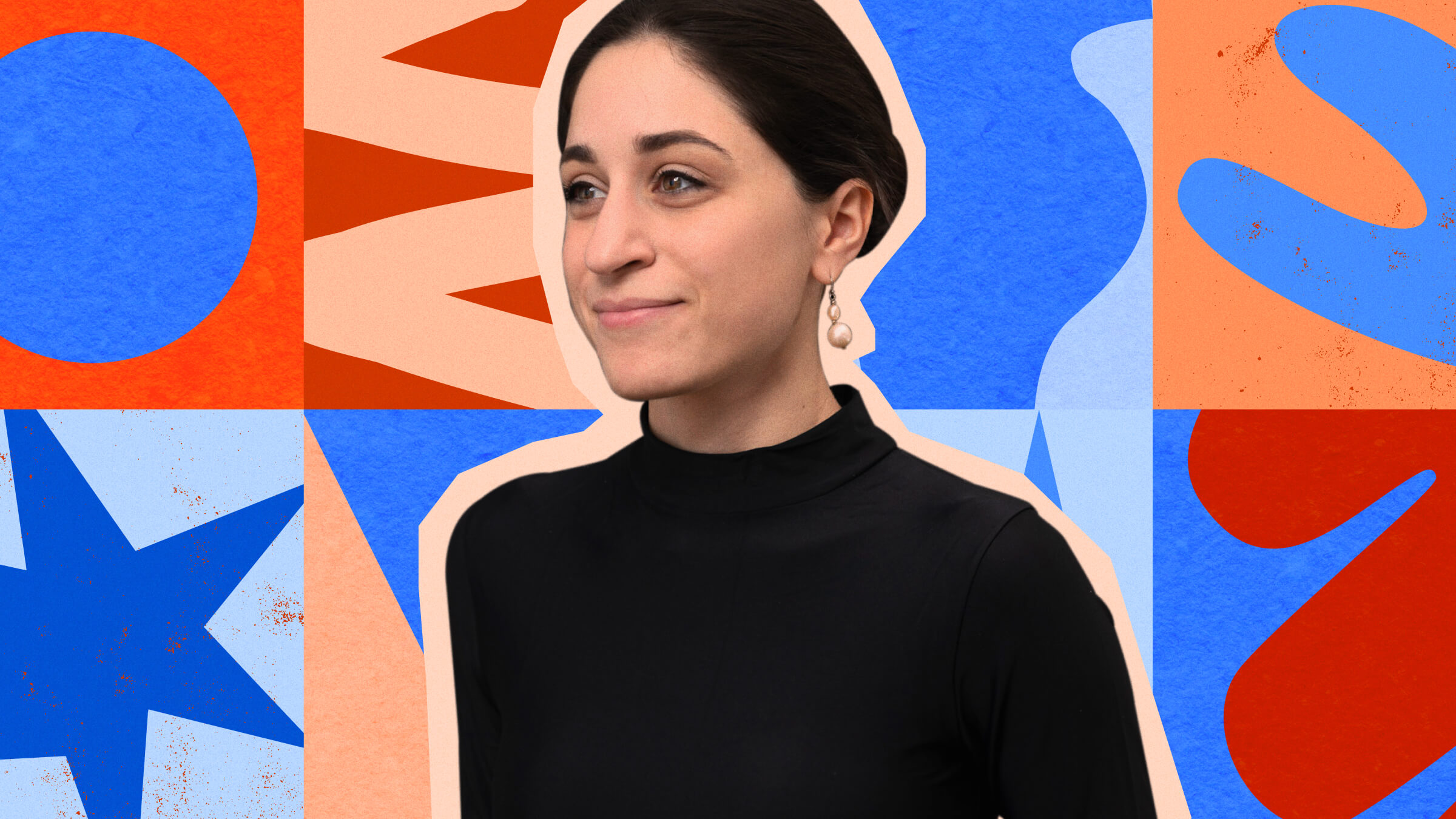
Talia Cotton is an internationally renowned designer, coder, educator, and innovator at the intersection of branding and technology. Passionate about pushing design possibilities through coding, Talia has been named an industry leader for her innovative approach and has worked with brands such as Google Arts & Culture, the New York Times, the Gates Foundation, and MIT.
After initially being headhunted by Michael Bierut at AIGA’s Command X competition, Talia led the design and development of algorithmic and data-driven brand identities and websites at the prestigious US design firm, Pentagram. She’s since founded her own design company, Cotton – a technology-driven creative agency pursuing purposeful design work and exploring new design possibilities through code, both in form and function. She also teaches Advanced Coding & Interaction Design at Parsons School of Design and lectures to audiences across the US, sharing her wisdom with everyone from students to design buffs to CEOs.
We were lucky enough to speak to Talia about embracing technology in design, her creative process and go-to design tools, and her top tips for aspiring designers.
My parents were musicians, so our household was incredibly creative growing up. I was heavily interested in the arts, but also just as much in science and math. My mother used to joke that the right career didn’t exist yet for me and that I would just have to make one up. (That’s some foreshadowing for you!)
I initially decided I didn’t want to follow in the footsteps of my creative parents, who had always struggled financially. Instead, I majored in business and psychology for a couple of years. I loved it, but it didn’t have the balance of logic and creativity that I sought, and that, in my head, still didn’t exist. It wasn’t until I transferred to Parsons School of Design and took my first coding class that I fell in love. I was addicted to the satisfaction of coding: the new possibilities for creative outputs and the logical processes required to get there.
Discovering coding as a means to design was both a blessing and a curse. It was a blessing because, at the time, very few designers knew anything about coding as a method to design. Once I got on the radar of a few professionals, I was in high demand, and my plate was always full. However, it was a curse because no company knew what to do with me. I never had a design director who could guide me in the traditional sense because they weren’t as familiar with the ins and outs of my medium.
I am almost embarrassed when people ask me how I got my job at Pentagram. The answer is: they asked me. I had been working as an independent designer/developer, and one day I received an email from Giorgia Lupi introducing herself and asking if I’d join Pentagram on both her and Michael Bierut’s teams. (I remember jumping up and down in my living room).
A couple of years earlier, I had been a contestant at AIGA’s Command X competition at their annual Design Conference. Each contestant had a daily design prompt to complete within 24 hours and present in front of the audience – thousands of conference-goers – hoping they didn’t get voted off. I didn’t know until later that Michael had been in the audience. Through a very long grapevine, I heard that my presentation resonated with him. I took that as an opportunity to reach out and introduce myself. Six months later, he and I met informally, and six months after that, Giorgia contacted me to work with them.
I was fortunate and rare to work on two design teams with practically opposing focuses – data visualization and branding – which allowed me to explore various projects relevant to my interests in coding and different manifestations of coding as a design medium. I loved the clients I got to work with through Pentagram and my colleagues. I have extremely high standards for my work, and it was a pleasure to be surrounded by others with a similar standard.
Since my work was so specialized – and since my two bosses didn’t have the same expertise I had – Pentagram gave me full autonomy over my work. That was a rewarding opportunity because I rarely had to run things by them before presenting to clients, and in turn, I gained a lot of client-facing experience.
Every design decision I make has a purpose and is preceded by much research. I spend as much time understanding the people I’m designing for and thinking about what I’m doing as I do on the design work. This is what drives originality. I rarely look at visual inspiration because – in my opinion – that makes the output less authentic.
This is especially important to me in coding because it’s easy to get carried away with cool-but-meaningless work when the output is so stimulating. To me, the creative capabilities of coding – interactivity, generativity, and adaptability (to name only a few) – are to be treated as other design outputs, such as color and typography. Choosing which to use and how to use it is just as important, and that’s what I think is missing in a lot of creative coding today.
Leading up to my decision to start Cotton, I’d had the pleasure of speaking to many different audiences about coding and design. I found that, in general, young designers had a prevalent interest in coding with next to no outlets to pursue it. I recalled facing the same challenge, but with my experience, I was now uniquely positioned to provide opportunities. Once I announced the idea more broadly, it confirmed that the design world needed a home for this new medium, and I felt it was my duty to create it.
The mission of Cotton is threefold:
Coding is exciting, and anyone pursuing design through it does so out of love. I want that to be the driving theme of our workplace. If we aren’t enjoying the process of a particular project, we reassess.
I’m passionate about integrating tech and design because it perfectly balances everything I’ve wanted in a career. I want to create the same opportunity for anyone who struggles with that dichotomy of interests (which, I’m finding out, is common among designers).
Firstly, it’s crucial to understand that coding is nothing more than a design medium. Some people might use Figma, some use pen and paper, and others use code.
Like any design medium, coding makes certain things possible in form and function that other methods don’t. With code, design can be interactive, generative, adaptable, automated, and data-driven. Each has a slew of intricacies and considerations for what makes it effective, which takes time to perfect. So that’s my first tip: practice, practice, practice!
In terms of producing higher quality work, once you gain enough practice to understand the ins and outs of each of the above principles, it’s time to question their uses. Ask yourself why each principle would benefit a design, and see if the answer creates meaning. Maybe you want the design to be more relatable, so you use interactivity. Perhaps you want the design to represent individuality, in which case you’d utilize the generativity principle.
It’s that second part that I’m the most interested in in my work: how to channel new coding possibilities to make better, more meaningful work.
I loathe trends! As far as I’m concerned, trends are inherently anti-design. I specialize in branding and identity design, and my design philosophy stems from that. Like that of a human, a brand’s identity is unique. Translating it into something visual requires a deep dive into what drives it and what makes it unique.
A brand’s values and ambitions, origins and current perceptions, subjects, and motifs are just a few things that I consider when creating a visual. Trends will always be a distraction from landing on that vision that is truly authentic to the identity – unless, of course, the brand identifies with being “trendy.”
I do my coding work using vanilla Javascript and sometimes just HTML and CSS. I use the HTML5 canvas or drawing libraries such as P5 about 50% of the time. When I tell people this, they’re often shocked that I don’t use any frameworks, but I remind them that this is a design, not a web application. Design is and always has been a straightforward and manual process where the shape and placement of everything matter. Sometimes my code is hundreds or even thousands of lines long, but the best design comes from just one line of code.
For those just starting, I’d suggest getting a minimal introduction to Javascript but quickly moving away from online classes or tutorials towards simply doing work with code. It’s easy to go down the rabbit hole of cool code tutorials, but solving real design problems using code as soon as possible will make you a better designer. For that, treat it like any design project—create a design strategy, iterate, ask for feedback, and iterate some more.
I have, and I feel incredibly fortunate for it! My favorite clients have been those with an informed perspective on design but who still give me creative freedom. I think there’s something comfortable about talking to people who get design because I can spend less time explaining the basics (e.g., “This is a wordmark, and this is an icon”) and more time exploring simple visuals for complex ideas. Knowing that they understand design is comforting because I feel like it’s a little bit more of a challenge to impress them, and it’s even more rewarding when I do.
Since I’ve worked with so many incredible clients, I don’t have a specific dream client or even a dream sector. I consider every single project an equally thrilling design challenge. Instead, my dream clients are equally as excited by new design possibilities as I am, not just in form and function but in capturing meaning and creating authenticity. (So far, all of the clients we’ve worked with at Cotton have come to us excited about the output, so we must be doing something right!)
I’ve taught and spoken to audiences ranging from students to CEOs, from design buffs to non-designers, and from rooms of a dozen to halls of a thousand, internationally, nationally, locally, virtually, and in person. While the exposure is nice, I’m lucky to have had the opportunity to talk to and get to know such a wide range of people in and around this industry. It’s given me a diverse perspective on what challenges people face in the field, what excites them, and what they’re looking for in the future.
I’ve faced more challenges than I can count on two hands. The two steadfast truths that I can attest to – and that have contributed to my career advancement – are love and guts. Do what you love, and do a lot of it. In turn, you will get better. Have the courage to speak up when things are frustrating or imperfect. Be prepared to make the change yourself, even if it’s uncomfortable – it will open up new possibilities.
We hope you enjoyed this inspiring interview with Talia Cotton! While you’re here, check out our Graphic Design Trends for 2023 and How to Build a Successful Design Agency with World-Renowned Designer Jessica Walsh. Or head to Envato Elements to start creating today!
Explore movie typography trends shaping 2026, from bold film fonts to cinematic branding, with inspiring examples and practical tips for creating impactful, screen-ready typography.
Explore the bold botanical design trend shaping 2026, from lush patterns and floral design to branding, interiors, and nature-inspired creative projects rooted in biophilic aesthetics.
Learn what font Disney uses, why it’s not downloadable, and discover Disney-style font alternatives to recreate that iconic, playful branding style in your own designs.
Explore PowerPoint templates with professionally designed layouts to create polished, modern, and visually cohesive presentations.