What font does Nike use? A complete guide to Nike typography and alternatives
Learn what font Nike uses, explore its typography evolution, and discover Nike font alternatives to create bold, minimal, high-impact designs for branding and campaigns.
Envato: Get every type of asset for any type of project, and access to AI tools. Start now
At $8 million for 30 seconds, brands are betting big on advertising's most concentrated moment. Here's what the biggest night in American advertising reveals about creative strategy in 2026.
On February 8, the Seattle Seahawks and New England Patriots will face off in Super Bowl LX. For the 127 million-plus US viewers expected to tune in, it’s the championship game. For the advertising industry, it’s something else entirely: the most concentrated advertising opportunity in North America, and arguably the only remaining broadcast where audiences actively want to watch the commercials.
The Super Bowl isn’t the world’s most-watched sporting event: the 2022 FIFA World Cup final drew 1.5 billion viewers globally, dwarfing the Super Bowl’s roughly 200 million worldwide audience. The Olympics, too, dwarf America’s big game. But the Super Bowl offers something neither can match: a single four-hour window where 120+ million Americans watch simultaneously, with 42% tuning in specifically for the ads — and it happens every year, not every four. In a fragmented media landscape where streaming has splintered audiences across dozens of platforms, that concentration of attention is genuinely rare.
This is why brands continue paying what they pay. NBCUniversal sold out its entire commercial inventory for Super Bowl LX by early September 2025, months ahead of schedule. The base rate started at $7 million for a 30-second spot, but with demand surging, prices climbed to approximately $8 million on average, with five to ten premium placements selling for more than $10 million each, according to NBC’s chairman of global advertising. That average figure has nearly doubled in a decade and increased more than 200-fold since the first Super Bowl in 1967, when a 30-second spot cost $37,500 on NBC (CBS charged $42,500 for the same window — the game was simulcast).
But the sticker price only captures part of the investment. Factor in production costs, celebrity fees, music licensing, agency fees, and the bundled media commitments NBC now requires across the Winter Olympics and NBA All-Star Game, and the true cost of a single Super Bowl campaign can exceed $40 million.
The pre-game campaign season is in full swing long before a ball is kicked. Over the past weeks, brands have been releasing teasers at a rapid clip, and some clear themes are emerging.
Budweiser unveiled its 60-second spot on January 26, featuring the iconic Clydesdales alongside a new character: a baby bald eagle. Set to Lynyrd Skynyrd’s “Free Bird,” the ad shows the horse and bird developing a relationship as they grow up together on a farm. The spot celebrates Budweiser’s 150th anniversary and leans heavily into American heritage themes.
Rocket Companies and Redfin dropped one of the most talked-about teasers this week, featuring Lady Gaga performing “Won’t You Be My Neighbor?” from Mister Rogers’ Neighborhood. The 60-second spot marks Redfin’s first Super Bowl appearance in its 20-year history and centers on themes of home, community, and connection. Lady Gaga described the project as an honor, noting that Fred Rogers “was for generations a heartfelt presence for children and families all over the world.”
Hellmann’s is back for its sixth consecutive Super Bowl with Andy Samberg playing “Meal Diamond,” a Neil Diamond parody character who sings about mayonnaise to the tune of “Sweet Caroline” (reimagined as “Sweet Sandwich Time”). The spot, filmed at the famous Canter’s Deli in Los Angeles, also features Elle Fanning.
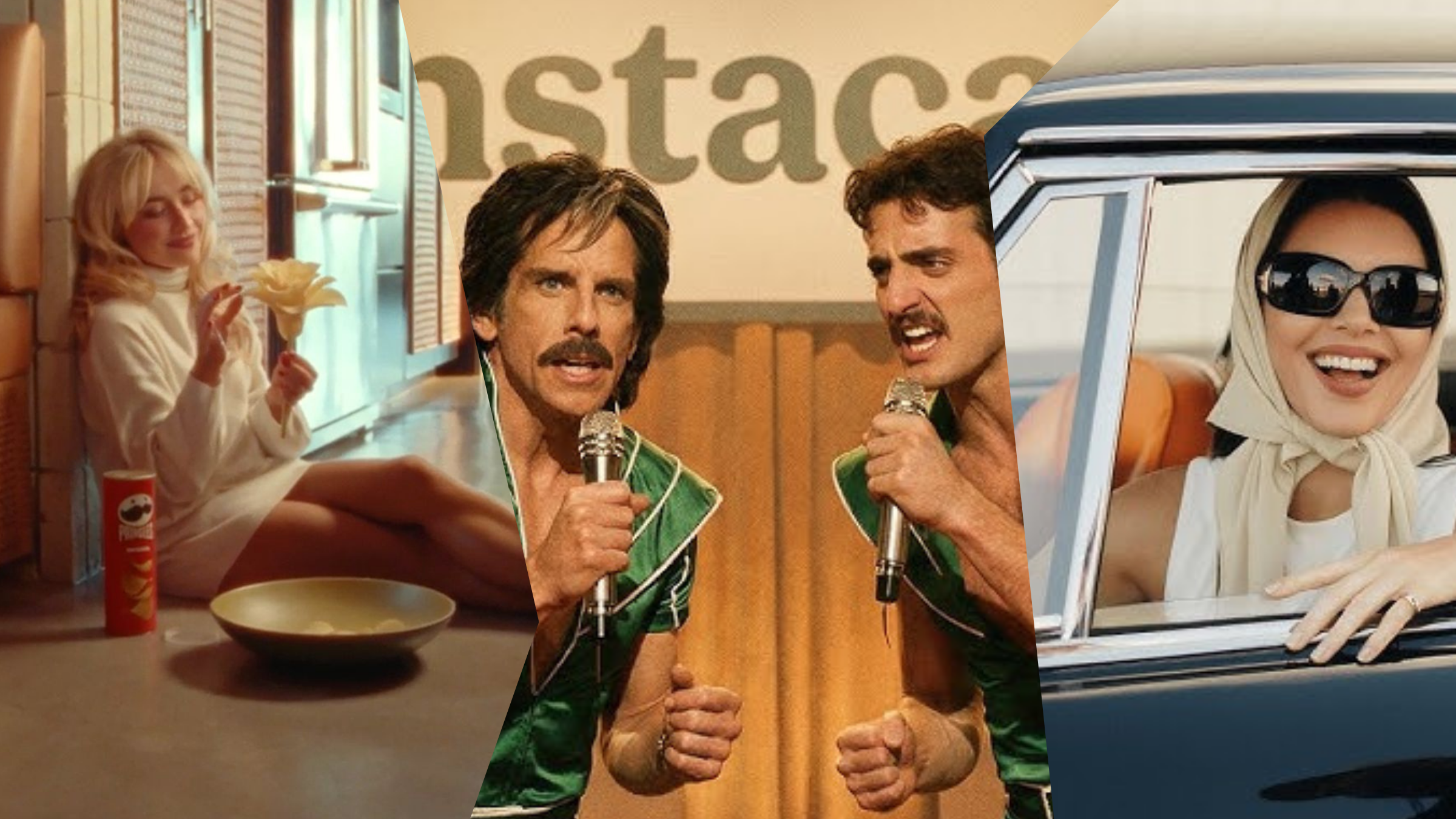
Pringles cast Sabrina Carpenter for her first-ever Super Bowl ad, with a teaser showing her playing “loves me, loves me not” with a flower made of Pringles chips. The spot ties into the brand’s revived “Once You Pop, The Fun Don’t Stop” campaign and airs during the third quarter. Carpenter, fresh off her “Short n’ Sweet Tour” and holding seven Grammy nominations, represents the kind of culturally current talent brands are prioritizing: 108 million social followers, streaming success, and a persona that translates across TV, social, and experiential formats.
Instacart is returning with Ben Stiller and singer Benson Boone in “Bananas,” a retro European disco-pop duet directed by Spike Jonze (his first Super Bowl spot in more than 20 years). The pair play a theatrical duo whose synchronized performance descends into rivalry over banana preferences.
Fanatics Sportsbook is making its Super Bowl debut with Kendall Jenner leaning into the “Kardashian Curse,” the long-running internet theory that athletes’ careers decline after dating someone from the family. “Haven’t you heard? The internet says I’m cursed,” she says in the 90-second spot, filmed in a “kursed” mansion filled with portraits of faceless ex-boyfriends.
Michelob Ultra released “The ULTRA Instructor” this week, starring Kurt Russell as a legendary ski coach training Lewis Pullman’s character in a spot that nods to Russell’s portrayal of Herb Brooks in “Miracle.” Directed by Joseph Kosinski (“Top Gun: Maverick”), the ad ties into Michelob’s Winter Olympics sponsorship and features cameos from Olympians Chloe Kim and T.J. Oshie.
Manscaped’s teaser features a close-up of a drain hairball that grows eyes and blinks. Liquid Death is running with papier-mâché heads. Bosch transformed Guy Fieri into “Just a Guy” using CGI to digitally remove his signature goatee and spiky hair. “I look like I sold insurance,” Fieri told Delish of the transformation, which he called one of the biggest moments in his career. In a crowded field, some brands are betting on shock value to drive conversation.
The advertiser roster for Super Bowl LX spans legacy players and first-time entrants. According to NBC, about 40% of advertisers this year have never bought a Super Bowl spot before. Here’s where things stand:
Anheuser-Busch returns as the game’s biggest advertiser with 2.5 minutes of national airtime across Budweiser, Bud Light, and Michelob Ultra. Bud Light is reuniting Post Malone, Shane Gillis, and Peyton Manning for a spot focused on the keg as the “universal fixture of any great Super Bowl party.”
First-time advertisers include Grubhub (making its national Super Bowl debut after Wonder acquired the company for $650 million), Kinder Bueno (part of Ferrero North America’s $100 million sports marketing investment), Liquid I.V., SVEDKA Vodka (the first vodka brand to run a Super Bowl ad in more than 30 years), Kellogg’s Raisin Bran (with William Shatner as “bran ambassador”), Tree Hut, Manscaped, Rippling, Fanatics Sportsbook, Hims & Hers (featuring Common with the tagline “Rich people live longer”), and Ro (starring Serena Williams as a GLP-1 patient ambassador).
Returning veterans include Pringles (9th consecutive year), TurboTax (13th appearance, this year starring Adrien Brody), Squarespace (12th appearance, with Emma Stone and Yorgos Lanthimos reuniting), WeatherTech (14th appearance), Hellmann’s (6th consecutive year), Dove (3rd consecutive year), Nerds (3rd consecutive year), Ritz (2nd consecutive year with Bowen Yang), Poppi (3rd appearance, first since PepsiCo acquisition), Uber Eats (6th consecutive year, with Matthew McConaughey and Bradley Cooper continuing the “football sells food” conspiracy campaign, joined by Parker Posey), Instacart (2nd year), Lay’s, Pepsi Zero Sugar (with a Taika Waititi-directed spot featuring a polar bear in what appears to be a nod to Coca-Cola’s iconic mascot), Rocket Mortgage, Novartis, Dunkin’ (4th consecutive year with Ben Affleck, teasing a pitch to “Jen and Matt”), and the “He Gets Us” religious campaign (4th consecutive year).
Notable absences: Nike will not advertise during Super Bowl LX, following its return to the game last year after a 27-year hiatus. Cryptocurrency advertisers remain absent after the category’s implosion following the heavily crypto-advertised Super Bowl LVI in 2022. Prediction markets, including platforms like Kalshi and Polymarket, are also prohibited from the national broadcast—the NFL has banned prediction-market commercials all season, citing concerns about market manipulation and regulation.
The NFL is capping sports betting commercials to six spots, reflecting an effort to manage the amount of gambling messaging viewers encounter during broadcasts.
Beyond the celebrity cameos and production spectacles, several patterns in this year’s lineup offer insight into where advertising is heading (at least for this kind of eyes-glued-to-screen national event).
Industry data suggests that pre-Super Bowl ads often perform better in efficiency than game-day spots because audiences are primed before kickoff. This year, brands started releasing teasers in early January, stretching the campaign window to nearly a month. Roughly 40-50% of advertisers are now releasing full ads three to seven days before the game, while another 30-40% release teaser content but hold the full spot until game day. For creative teams, the Super Bowl is no longer a single deliverable but an extended campaign with multiple touchpoints across social, streaming, and broadcast.
Dove returns with its body confidence message for the third consecutive year, focusing on empowering girls to stay in sports. The NFL’s own cause spot this year features Michael Strahan, Cam Heyward, and Christian McCaffrey singing “You Are Special” alongside children from nonprofit partners. Rocket’s Lady Gaga spot leads with community and connection, not product features. In a sea of celebrity chaos and shock tactics, the ads that generate the strongest long-term brand lift tend to be the ones that make people feel something genuine.
SVEDKA’s ad features robots, vodka, and AI. Salesforce is partnering with MrBeast to promote its Agentforce AI agents. Meta’s Oakley campaign features AI glasses with Marshawn Lynch, Spike Lee, and IShowSpeed. But after Google’s Gemini embarrassment ahead of Super Bowl LIX — when viewers spotted the AI claiming Gouda accounts for “50-60% of global cheese consumption” in a pre-released regional Wisconsin ad, forcing Google to edit the spot before broadcast — brands appear to be treading more carefully. AI is a talking point, not a centerpiece, for most advertisers this year.
Super Bowl advertising costs look irrational in isolation. But the numbers reveal a logic.
The Super Bowl remains one of the only media events capable of delivering more than 120 million live viewers simultaneously in the American market. In a fragmented media landscape where streaming has splintered audiences across dozens of platforms, that concentration of attention is genuinely rare. According to Kantar research, Super Bowl ads have delivered an average return of $4.60 per dollar spent, with top performers achieving double-digit ROI — a level of efficiency difficult to match elsewhere. And as we touched on earlier, almost half of viewers tune in specifically for the commercials, making the ads themselves part of the entertainment.
Digital viewing continues to grow. Super Bowl LIX saw streaming viewers account for 14.5 million of the total audience, with Tubi alone drawing 13.6 million — a Super Bowl streaming record and a significant jump from prior years. Industry analysts predict Super Bowl LX will continue this trajectory, with digital platforms offering advertisers better targeting, interactive ad formats, and real-time performance data alongside the traditional broadcast reach.
For global brands, the calculus extends beyond the US domestic market. Super Bowl broadcasts reach viewers in over 130 countries and more than 30 languages. The cultural conversation that follows, amplified across social media for days (or even weeks) afterward, extends the reach of successful spots far beyond the broadcast window. Some of the best go down in history and are fondly remembered even decades later.
You don’t need an $8 million budget to learn from the Super Bowl. The trends that perform on advertising’s biggest stage reveal something about what resonates more broadly.
When every brand is maximizing production value, the ads that cut through tend to have the clearest messages. Budweiser’s spot has no dialogue — just a horse and an eagle growing up together. Rocket’s teaser is a single song. Pringles’ Sabrina Carpenter spot is 15 seconds of “loves me, loves me not.” When you have 30 seconds, and everyone is watching, clarity beats complexity.
Last year’s halftime performance from Kendrick Lamar generated 80 million social media engagements. The game itself generated 2.83 billion total engagements across Instagram, X, and YouTube. For brands without Super Bowl budgets, this is where the real opportunity sits. A well-timed social campaign during the game can capture meaningful attention at a fraction of the broadcast cost.
The data shows ad efficiency hasn’t kept pace with rising costs — brands are paying more but not necessarily seeing proportional results. Differentiation comes from ideas, not budgets. Skittles is staging a live activation at a fan’s home with Elijah Wood rather than buying a traditional in-game spot. Avocados From Mexico is using an AI-powered recipe generator instead of a broadcast buy. These alternative approaches are generating strong results without the premium TV spend.
The days leading up to the Super Bowl see elevated engagement across social platforms. YouTube becomes the destination for commercial replays and reactions. TikTok thrives on real-time memes. If you’re planning content around the event, the window extends well beyond the broadcast itself.
Super Bowl LX kicks off February 8 at Levi’s Stadium in Santa Clara, California, airing on NBC, Peacock, and Telemundo. Green Day performs a pre-game show starting at 6pm ET, with Charlie Puth singing the national anthem. The halftime show, sponsored by Apple Music, features Bad Bunny.
The ads will generate headlines. The creative work will be dissected. And marketers everywhere will debate the results. But the underlying lesson stays consistent: attention is the scarcest resource in advertising, and the brands that earn it do so through creative work that connects.
The $8 million price tag is just the entry fee. The real competition happens in the ideas.
Sunday, February 8, 2026, at Levi’s Stadium in Santa Clara, California. Kickoff is 6:30pm EST, airing on NBC, Peacock, and Telemundo. Green Day performs a pre-game show starting at 6pm ET.
Approximately $8 million on average for a 30-second spot, with premium placements selling for more than $10 million — nearly double the cost from a decade ago.
Confirmed advertisers include Budweiser, Pringles, Hellmann’s, Rocket Mortgage, Instacart, Dove, TurboTax, Uber Eats, Dunkin’, Pepsi Zero Sugar, and dozens more. First-timers include Grubhub, Kinder Bueno, SVEDKA Vodka, Hims & Hers, and Ro.
The Super Bowl delivers over 120 million simultaneous viewers in an increasingly fragmented media landscape. Kantar research indicates Super Bowl ads have delivered an average return of $4.60 per dollar spent, with top performers achieving double-digit ROI.
Nostalgia and emotional storytelling, pop culture celebrity casting, shock value tactics, and extended teaser campaigns building weeks before the game.
The Seattle Seahawks face the New England Patriots. The Patriots are chasing a record seventh title.
Super Bowl LIX in 2025 drew 127.7 million average viewers in the U.S., making it the most-watched U.S. television broadcast in history. Globally, the audience reaches approximately 200 million.
Bad Bunny, with Apple Music sponsoring the halftime show for the fourth consecutive year. Charlie Puth will sing the national anthem.
Most brands now release teasers or full ads before game day. Around 40-50% drop full spots three to seven days early to maximize reach.
No. Nike sat out this year after returning in 2025 following a 27-year absence.
Feature image: Pringles
Learn what font Nike uses, explore its typography evolution, and discover Nike font alternatives to create bold, minimal, high-impact designs for branding and campaigns.
Curious about what’s next in email? Explore the top email marketing trends for 2026, from AI personalization to interactive designs you can’t ignore.
AI-generated ads, live campaigns, nostalgic cinema and animal-driven storytelling define 2026 — where tech meets human creativity in bold new ways.
From a university dorm room tradition to a $199 billion global phenomenon — Singles Day has quietly become the global retail event of the year. Here's your playbook for joining in.