
How to tell your agency’s story effectively via a digital brochure
Want to win over clients with a professional digital brochure?
Envato: Get every type of asset for any type of project, and access to AI tools. Start now
Keen to know the ins and outs of behavioral data? From using CRM tools to mastering your social media algorithm, here's how to use behavioral data to inform and improve your marketing strategy.

While the virtual world brings plenty of challenges, it also provides new and continually evolving opportunities for innovative marketing tactics – and there are golden nuggets hidden in the vast digital lakes of consumer data.
The heart and soul of customer behavior hides beneath all the ones and zeros. It’s not enough to observe this data – you must decode it and turn it into actionable insights. We’re here to walk you through the basics of using behavioral data in marketing.
Every time a customer views a web page, abandons a shopping cart, or makes a purchase, you get a glimpse into their buying behavior. In marketing, behavioral data refers to these and other similar actions.
Each time a customer interacts with your brand or marketing campaigns, this data can be recorded and collected – so make sure you’re saving it somewhere accessible! You can better understand your customers by performing behavioral data analysis to facilitate targeted and personalized marketing strategies and customer segmentation.
Data enrichment is a process that can enhance the value of behavioral data by adding additional information to it, such as demographics, geolocation, or purchase history.
From a design standpoint, behavioral data analysis provides information to improve your marketing visuals and create compelling audio guides using professional voice-over services, which can enhance the customer experience. For example, let’s say you’ve added new flashy visuals to your ads which some customers find distracting or confusing. You can target these customer types through ads with a cleaner design.
Behavioral data sounds fantastic, right? The question is, where do you even begin to hunt for this informative data?
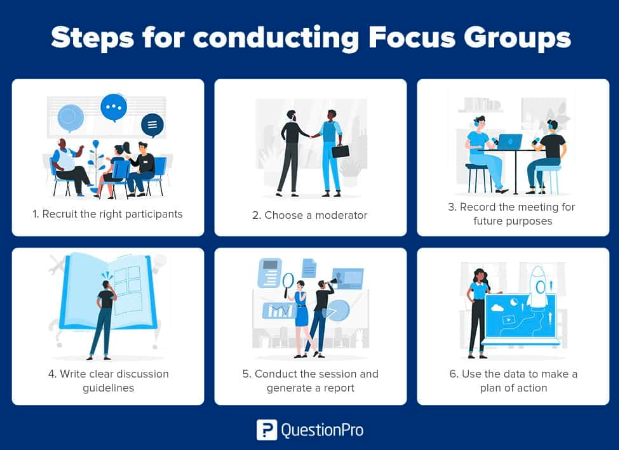
Next to A/B testing, focus groups are some of the most tried and tested methods for gaining insight into customer behavior. They give you hands-on feedback from carefully selected audience types.
First, decide what target audience behavior you want to understand better. For example, you may want to determine whether your audience prefers long-form ads with lots of information or simple images with a minimalist design.
Next, recruit consumers that fit your primary customer segments. Research and due diligence will ensure you prepare your group moderators with the right questions for both quantitative and qualitative data.
With new information about your potential customers, you can tailor marketing campaigns and tactics to meet their preferences or eliminate pain points.
Customer surveys and feedback forms are another easy way to get to know your customer base. You can implement these on all your digital marketing channels, including your website, social media, customer support, and email newsletters. For instance, you can use Windows Kiosk Mode to securely set up feedback stations in physical locations.
You can combine forms with rules-based AI to target different customer segments and prevent fraudulent data.
You can tally up the responses from recordings in your call center and learn something new about your customers’ behavior. For example, you might discover that customers are having difficulty finding the shopping cart icon on a newly designed and dynamic website, or they think your product photography is lacking.
Another great way to improve feedback analysis is to identify patterns and trends in customer feedback using machine learning for customer service, allowing for more proactive and personalized responses.
Nearly all behavioral data influences the customer journey. If you’re zoomed in too small, things might start looking like an abstract expressionist painting – you must look at the entire image to make sense (although painters like Jackson Pollock would argue that there is no deeper meaning to discover).
You want to design a website that moves visitors through the customer journey, and mapping will ensure your website provides a seamless buying process and user experience.
For example, add a link to your Instagram page that sends customers to your online portfolio. From there, you can provide options to subscribe to a newsletter, visit your online shop, or create a user account.

Only through customer journey mapping will you be able to find every informative touchpoint for your behavioral analysis. With a mapped customer journey, personalized and efficient customer journey orchestration can be put in place. This ensures each touchpoint is effectively utilized to enhance the overall user experience.
For freelancers and designers, you can use basic CRM tools, reputation management apps, and other e-commerce solutions to automate the collection and analysis of user behavior on your website.
These tools also enable you to segment your customers with higher granularity. For example, customers over 55 may be more interested in your landscape photography prints, while those aged 18-35 spend much more time on your sports photography prints. Gleaning this type of info helps you personalize the user experience.
CRM services and other apps can also connect marketing tasks to automate your workflows, including initiating email marketing campaigns and sending abandoned cart email reminders.
Using a CRM also enables you to create an evergreen funnel optimized to convert leads into customers at every stage of the customer journey, ensuring a consistent and reliable revenue stream for your business.
While there is no one-size-fits-all approach to behavioral data implementation, there are plenty of best practices to follow.
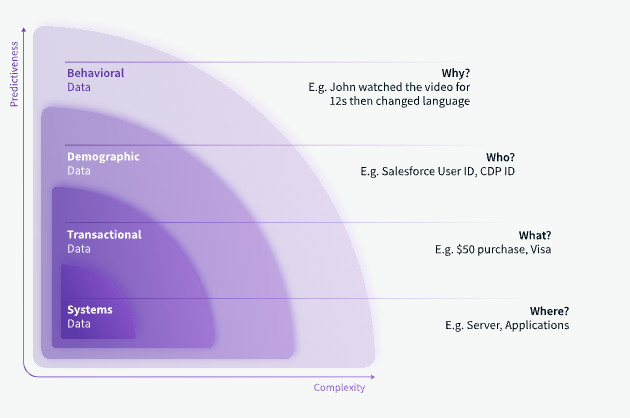
Collecting and analyzing behavioral data is only the beginning. Once you have mapped out the customer journey and applied insights to your marketing strategy, you must continually repeat the process. Implementing best practices for analyzing behavioral data, like BigQuery optimization, can further enhance data analysis efficiency, ensuring more accurate and actionable insights for ongoing optimization.
Customer shopping behavior will continue to evolve. Ensure you create systems to record every interaction and touchpoint along the sales funnel.
Use tools like customer feedback surveys and CRM platforms to have readily available real-time data. Combined with predictive analytics and other available resources like Tableau online training, your team can stay half a step ahead of major changes in consumer behavior.
You will be able to break down your customers into categories such as the following:
Additionally, you can further segment your customers according to buying behaviors, such as:
With time, you’ll be able to come up with creative variables that best suit your needs. For example, if you’re expanding into new regional markets, you could use tools like geospatial analytics to reveal local trends you might otherwise miss.
Research shows that global social media advertising spend is set to reach over 262 billion dollars in 2028. That’s double the amount of money spent in 2022.
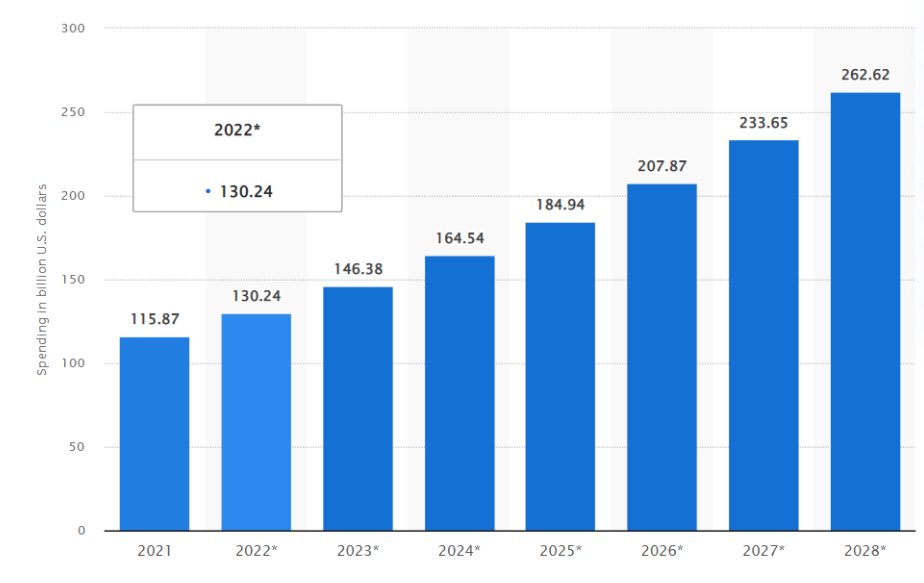
There’s a good reason for that. A 2023 report found that 59.4% of the population (4.76 billion people) are now active social media users.
It all boils down to applying behavioral data to social media. What channels will help you reach your target audience? What’s trending on TikTok or Twitter?
For example, you might discover video topics, hashtags, and content lengths that rank the highest for your customers. Once you understand the game, you can build engaging and relevant marketing content.
It’s always best practice to keep one eye on your competitors and one eye on the market. How is the competition altering its marketing tactics? Are you increasing their presence on a social media platform, or are they running a new type of promotion?
You can watch the market by subscribing to industry publications and weekly newsletters and keeping a pulse on current marketing trends.
Combine this with your behavioral data analysis, and you will glean insights that help you beat out your competitors.
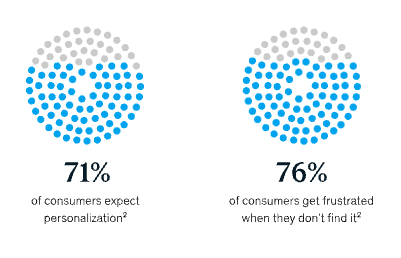
A report from McKinsey found that 71% of customers expect personalization from brands or businesses they choose. The good news is that as a newly crowned monarch of behavioral data, you will be able to enhance the personalization of your marketing efforts.
For example, if you know that certain customers are occasional buyers or if the user data indicates thriftiness online, you can target them with promotions for milestones like birthdays, anniversaries, and regional holidays. Digging deeper with behavioral data, you can target and retarget customers on their preferred channels.
When it’s all said and done, behavioral data is critical to leveling up your marketing strategy. Now that you understand how to use it, it’s time to get moving. Start mapping the customer journey based on buying behavior, and watch your conversion rates skyrocket!
Envato Elements is the ultimate unlimited creative subscription for marketers and creators. It’s a one-stop shop for all your marketing assets, featuring a diverse and extensive library of graphic, web, and video templates, stock photos, audio tracks, and so much more.
Want to win over clients with a professional digital brochure?

Here's everything you need to develop successful product branding.

A practical take on lead generation for creative agencies.

Get the most out of SXSW London with this guide to key events.